Skip to content
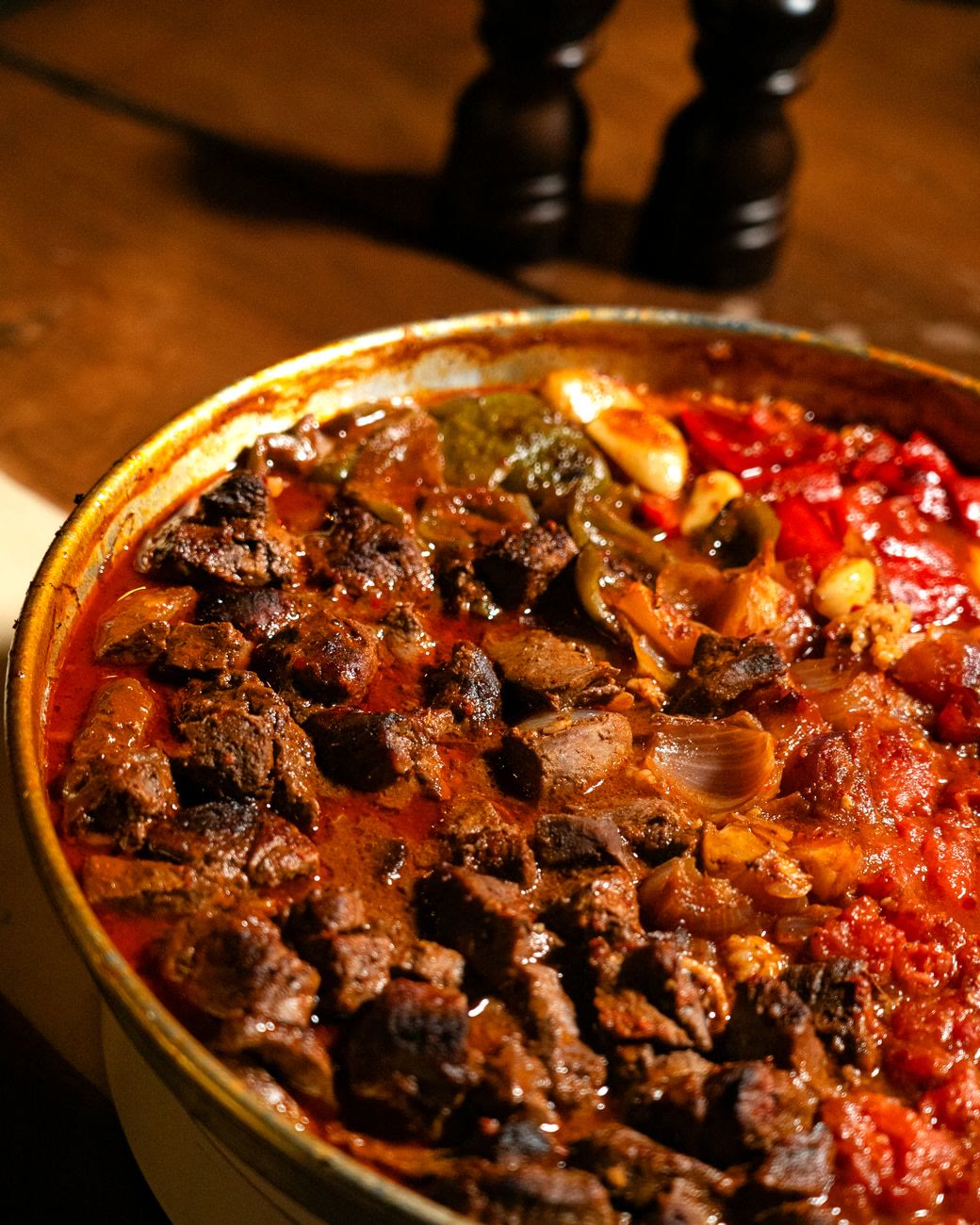
Cooking class preparing traditional Moroccan dishes
Food & Culture

Moroccan Food Guide: 12 Dishes You Must Try in 2026

Moroccan cooking is slow, aromatic and deeply generous — a cuisine of clay-pot stews, Friday couscous and mint tea poured from a height. These are the twelve plates that define the table, and where to eat each one.

Eddyafa Travel
Journal
In this article4 min read

Moroccan Food in a Nutshell

Three ideas explain almost everything on a Moroccan table. First, patience: stews simmer for hours in covered clay tagines until the meat surrenders. Second, balance: sweet meets savoury — prunes with lamb, honey with chicken, orange blossom in a meatball soup. Third, bread as cutlery, because most Moroccans eat from the shared plate with the right hand.

Spice blends do the quiet work: ras el hanout can carry thirty ingredients, but cumin, saffron, ginger, turmeric and preserved lemon are the everyday backbone.

The Big Three: Tagine, Couscous and Pastilla

If you only eat three things in Morocco, eat these — they are the cuisine's foundation and every family has its own version.

  • Tagine: the conical clay pot gives its name to the dish — lamb with prunes and almonds, chicken with preserved lemon and olives, or kefta with eggs in tomato sauce.
  • Couscous: steamed semolina with seven vegetables and meat, traditionally the Friday lunch after mosque — ask for it anywhere, any day.
  • Pastilla (b'stilla): Fez's famous pie of shredded pastry, pigeon or chicken, almonds and cinnamon, dusted with icing sugar — sweet and savoury in one bite.
  • Tangia: Marrakech's bachelor dish — meat slow-cooked in an urn buried in the hammam ashes, spiced with saffron and preserved lemon.

Street Food: Eat Like a Local

The cheapest and often the most delicious meals happen on the street, at steamy stalls and night grills that locals queue for. Point, pay in small notes, and eat standing up — you are doing it right.

  • Harira: the tomato-lentil-chickpea soup that breaks the fast at Ramadan, eaten year-round with dates and chebakia.
  • Maakouda: fried potato cakes, usually stuffed into bread with harissa for a two-euro lunch.
  • Msemen and baghrir: flaky flatbread and thousand-hole pancakes, served dripping with butter and honey at breakfast.
  • Grilled brochettes: lamb or kefta skewers at night stalls, wrapped in bread with onion and cumin.
Lively street in a Moroccan medina

Seafood on the Atlantic Coast

From Essaouira to Agadir, the coast eats differently: fish landed that morning, grilled over charcoal and eaten with your fingers. Essaouira's sardines are a local religion, and the fish markets let you choose your own lunch before a nearby grill cooks it for a few dirhams.

  • Essaouira: grilled sardines, seafood tagine and salt-baked whole fish.
  • Agadir: beachfront grills and the Souk El Had fish hall.
  • Timing: go late morning when the boats come in; the freshest trays sell out by noon.

Sweets, Mint Tea and the Ritual of Hospitality

No visit finishes without tea: gunpowder green tea, fresh mint and a lot of sugar, poured from a height to build the foam — refusing a glass is refusing the welcome. The sweet tray follows the same logic of generosity.

  • Chebakia: sesame cookies shaped like roses and soaked in honey — Ramadan's signature.
  • Ghriba: crumbly almond or coconut biscuits that melt with tea.
  • Sellou: toasted flour, almond and sesame paste — celebration food, also served to new mothers.
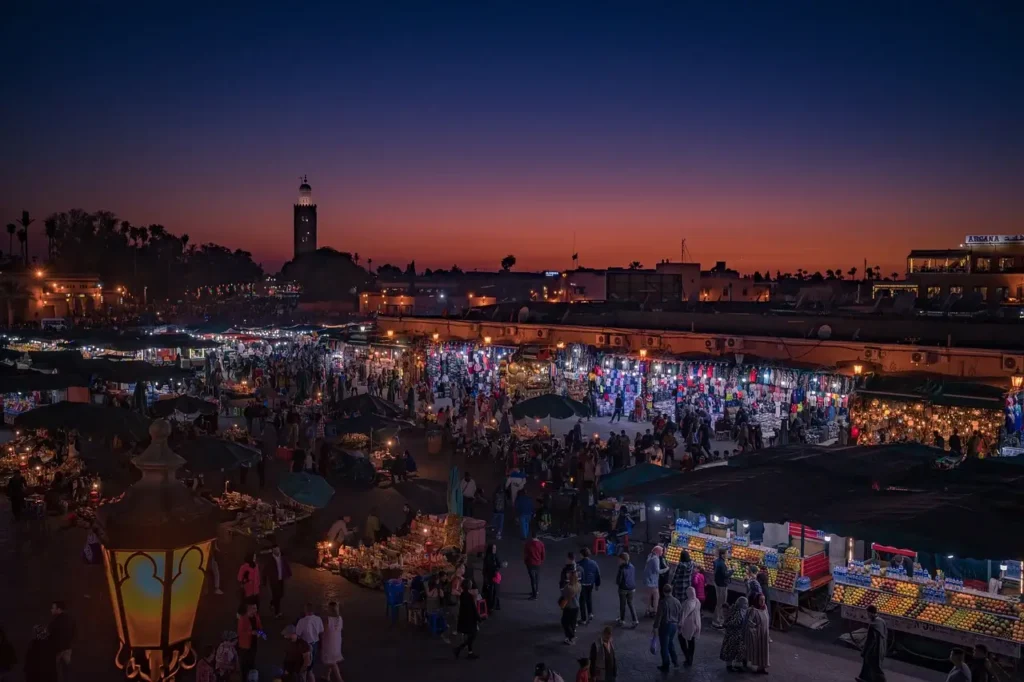
  • Orange juice: Jemaa el-Fna's famous stalls press glasses for about 1 euro.

Where to Eat: From Street Stalls to Riad Tables

The best meals in Morocco come in three tiers, and mixing them is the point — a street breakfast, a medina lunch and a rooftop dinner tell you more about the country than any single restaurant.

  • Local bistros: look for the set menu (plat du jour) handwritten on the wall — two courses for €5–8.
  • Riad dining: candlelit courtyards, seasonal menus, €25–45 per person — book ahead.
  • Cookery classes: start in the souk, cook over coals, eat what you made — €25–50 all in.
  • Alcohol: served in hotels and some restaurants; rarely in the medina. Fresh juices are everywhere.
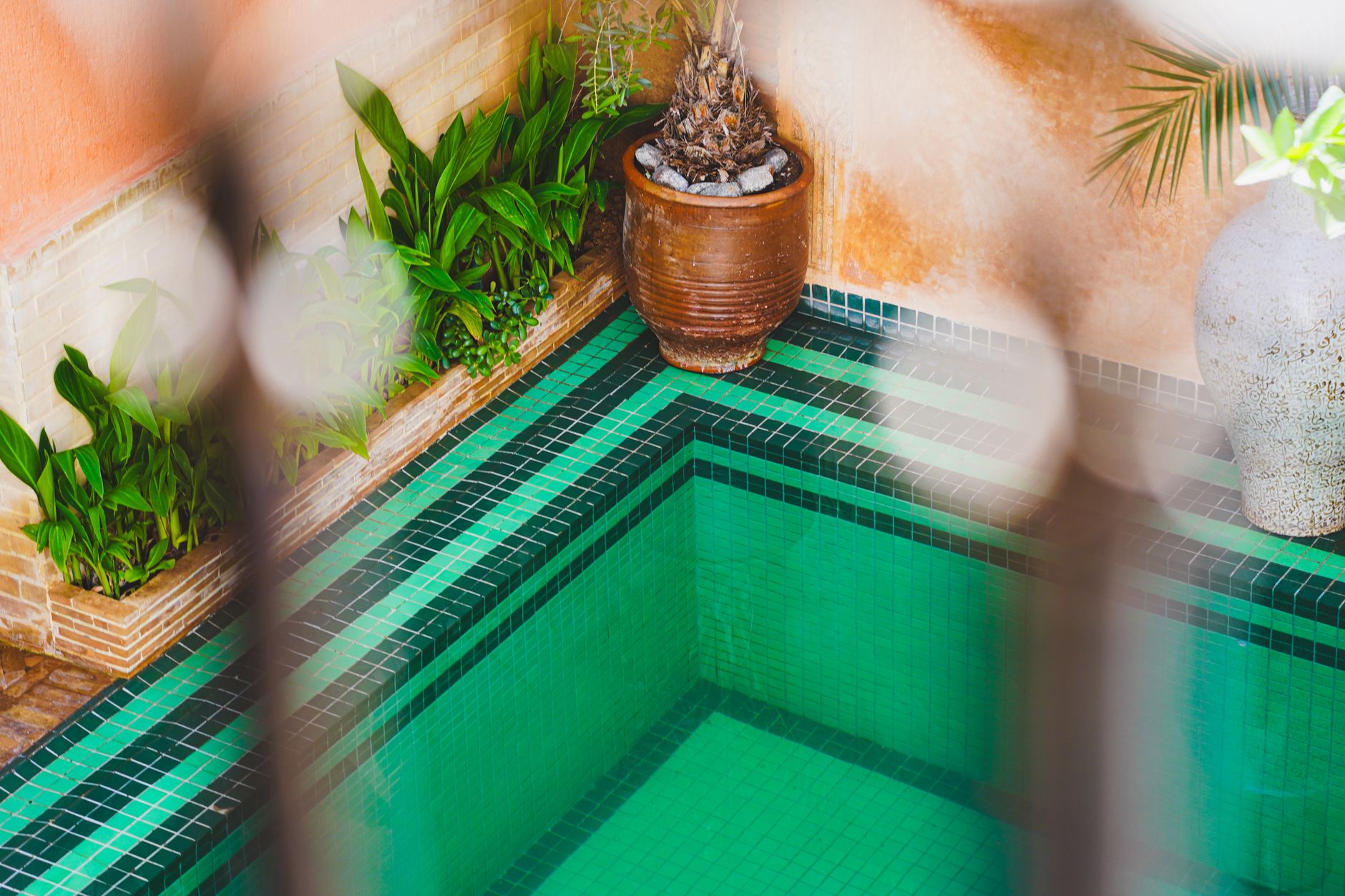
Courtyard of a traditional riad in Fez

Spices and the Souk

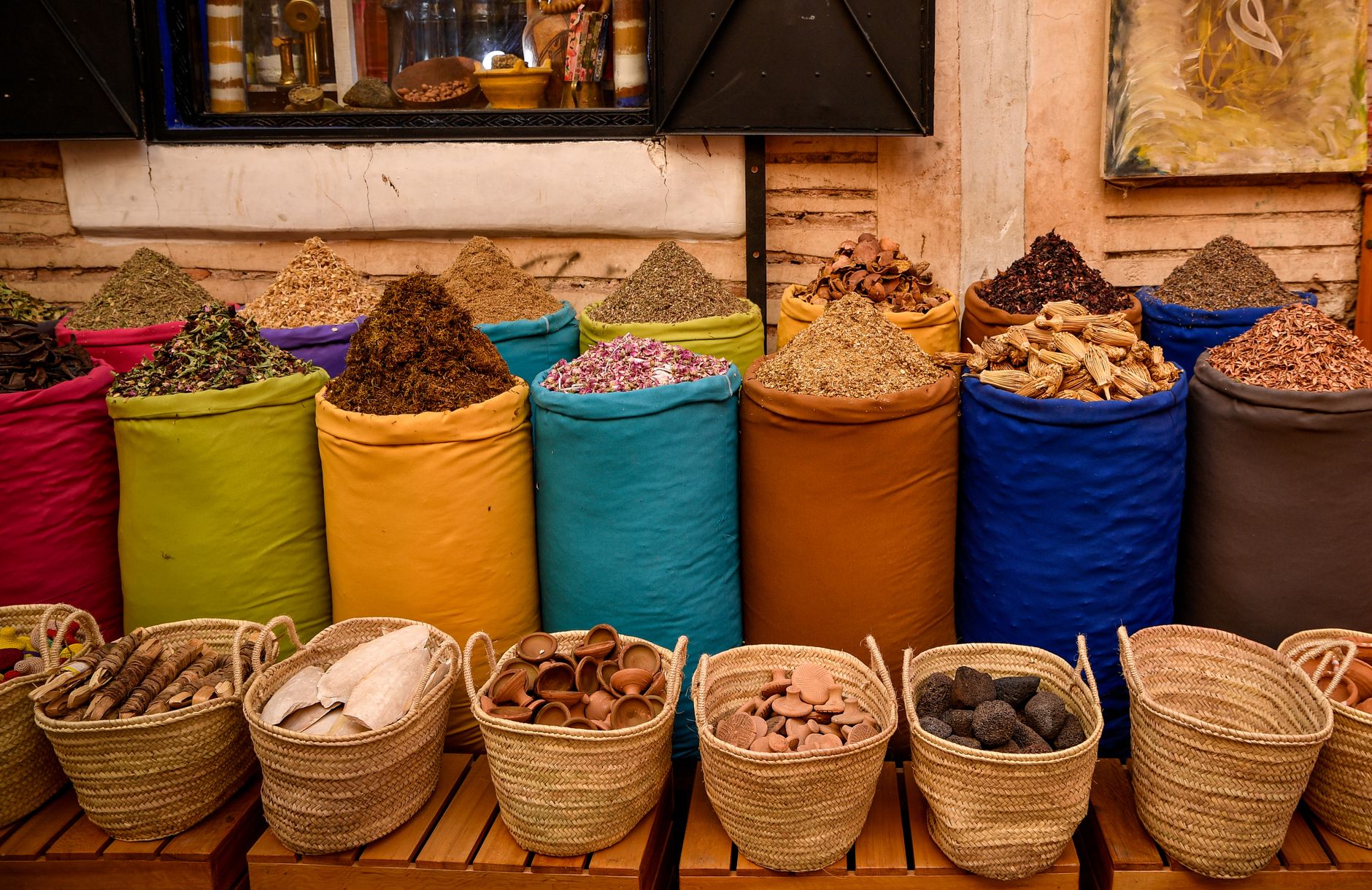
The spice stall is the most photographed corner of any souk — and a working pantry, not a museum. Moroccans buy small quantities often, so do the same, and keep the soft cone-and-paper packets away from damp luggage.

  • Ras el hanout: the master blend — buy from a stall with turnover, not a decorative pyramid.
  • Saffron: real Moroccan saffron comes from Taliouine; it should smell like hay and honey, not dust.
  • Cumin and harissa: the everyday pair — cumin with everything, harissa if you like heat.
  • Argan oil: culinary argan from the cooperias around Essaouira, roasted and nutty.
Spices and handmade goods in a Moroccan souk

Food Etiquette and Practical Notes

A few habits keep you comfortable at a Moroccan table — and they are about respect more than rules.

  • Right hand only: eat and pass plates with the right hand; the left stays out of shared dishes.
  • Bread is a tool: tear it, scoop with it, never plate it face-down.
  • Vegetarians: well catered in cities (tagines of vegetables, omelettes, salads) — harder in remote mountain stops, so say so when booking.
  • Pork and alcohol: uncommon outside hotels — plan around them rather than hunting.
  • Wash first: many homes and medina eateries offer a jug and basin before meals — use it, it is hospitality, not hygiene theatre.

Begin your adventure

Your dream Morocco trip starts here

Tell us where you want to go, when, and at what pace — we’ll craft a tailor-made itinerary with private transport, hand-picked riads and local guides.