Skip to content
Relaxing Moroccan spa retreat
Culture & Wellness

The Moroccan Hammam Guide: What to Expect on Your First Visit

Steam, black soap, a rough kessa glove and someone who will exfoliate you like they mean it. The hammam is Morocco's oldest weekly ritual — here is how it works, what it costs and how not to look like a tourist having a panic.

Eddyafa Travel
Journal
In this article4 min read

What a hammam actually is

A hammam is a public steam bath, descended straight from the Roman bathhouse model and adapted over centuries into something more social than medical. In Morocco it is still a weekly institution: most neighbourhoods have one, families go together on a set afternoon, and the person at the scrub bench has been doing this since before you were born.

Do not arrive expecting candles and whale music. The traditional hammam is tiled, loud, hot, humid and gloriously unpretentious — three rooms of increasing temperature, buckets of warm water, and a rhythm of soap, steam, scrub and rinse that people have repeated every week for generations. The luxury-spa version exists too, and it is wonderful, but it is a different animal with a different price tag.
Two hammams, two experiences

Understanding which door you are walking through solves most first-visit anxiety.

  • The neighbourhood hammam: entry around 10–30 dirhams, a bucket and a stool, mixed at family hours and single-sex at set sessions (women often by day, men in the evening — ask). Bring your own soap and towel. This is the authentic weekly ritual.
  • The spa hammam: 200–600 dirhams for the full ritual, private or near-private, towels and tea included, staff who explain every step. Found in riads, hotels and dedicated spa houses like the famous ones in Fes and Marrakech.
  • The middle ground: tourist-oriented hammams in the medinas offering the standard scrub for around 300–500 dirhams — perfectly fine, just know you are paying the convenience tax.
  • What you get in both: the same core treatment — steam, black soap, kessa scrub, ghassoul clay, rinse. Only the room, the pace and the bill change.
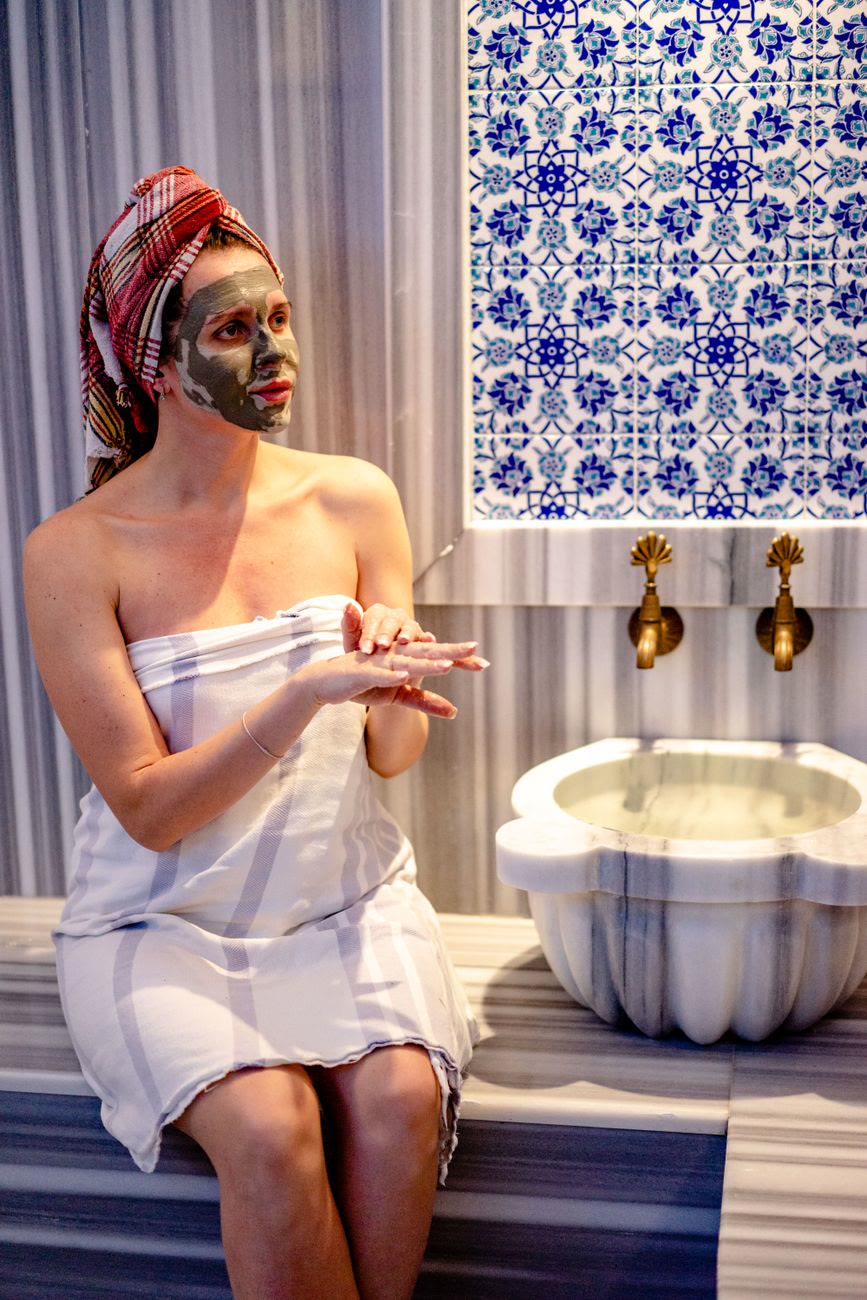
Relaxing spa treatment in a Moroccan wellness retreat

The ritual, step by step

Whoever you go to, the choreography is basically the same. Knowing it in advance means you can relax instead of guessing what happens next.

  • Warm up: ten to fifteen minutes in the hot room so your skin softens — this is the step tourists skip and regret.
  • Savon beldi: a scoop of olive-oil black soap is spread over your skin, then you rest under more steam for another ten minutes.
  • The kessa scrub: the main event. A rough woven glove is worked over your skin in firm passes until it rolls up into grey little threads — that is dead skin, and there is more of it than either of you expected. It does not hurt; it feels like a very aggressive towel.
  • Ghassoul clay: Atlas mineral clay, sometimes with rose or mint, applied to hair and body and left to dry to a chalky finish.
  • Rinse and oil: buckets of warm water, then argan oil or black soap finish, and you emerge two kilos lighter and strangely newborn.

Etiquette and what to bring

The rules are few but they matter, and following them is what separates a welcome guest from a watched tourist.

  • Bring: flip-flops, a towel (not in spas), your own small soap if going public, and a waterproof bag for the phone — nothing else.
  • Dress code: in single-sex public sessions most locals bathe in their underwear or fully; tourists are expected to wear a swimsuit and nobody will argue. In mixed spa hammams, swimsuits are the norm.
  • Slower is better: rush nothing, sit on the little stools, pour water steadily. The heat is genuinely intense — if you feel dizzy, leave the hot room immediately, that is normal physiology, not weakness.
  • Cash and tips: public hammams are cash-only and small; 20–50 dirhams for your scrub attendant is generous in a spa, and exact change in a neighbourhood one.
  • Timing: go at opening, not at 8pm when every family in the quarter is in there. Avoid a heavy lunch first, and drink water afterwards — you will sweat more than you think.

First-timer nerves, answered

Almost everyone's first hammam produces the same three questions. The answers are boring, which is good.

Is it painful? No — firm, thorough and occasionally surprising, but the kessa glove is exfoliating, not abrading. Does anyone care that you are a tourist? Not particularly; they care that you are not sitting on someone's bucket. What if I am modest? Choose a single-sex session, bring a swimsuit, and remember that everyone present is far too busy with their own scrub to evaluate yours — the hammam is one of the least self-conscious rooms in the country.

Where to try it

Every city has options, and the best ones are rarely the fanciest. In Marrakech, the neighbourhood hammams around Mouassine and Derb Dabbachi are the real thing, while the medina's spa hammams handle tourists politely and well. Fes has the deepest tradition — several historic hammams still operating — and Marrakech's private hammam houses are the ones most people photograph.

On a budget: public hammam plus a bottle of argan oil from the souk, under 100 dirhams total, and you will float home. Splurging: the two-hour ritual with massage in a restored riad, 600–900 dirhams, worth it exactly once before you decide you prefer the real thing. Either way, book the first one for early in your trip — a hammam on day two makes the rest of the week feel easier, and you will want to go back.

Begin your adventure

Your dream Morocco trip starts here

Tell us where you want to go, when, and at what pace — we’ll craft a tailor-made itinerary with private transport, hand-picked riads and local guides.