Skip to content
A busy covered market in Morocco with stalls and shoppers
Shopping

Morocco Souks & Bargaining: A Shopper's Guide

Morocco's souks are not a trap and they are not a museum; they are working markets where almost everything is negotiable and the haggling is part of the fun. Here is how the bargaining actually goes, what is worth buying, the red flags to walk past, and where to shop in Marrakech, Fes and Agadir without being a nuisance.

Eddyafa Travel
Journal
In this article9 min read

What a souk actually is

A souk is simply a market, and in Morocco it is less a single place than a neighbourhood: a web of lanes around the medina where whole streets sell one trade, leather here, lanterns there, carpets squeezed into the widest rooms because they need the wall space. The word means commerce, and the same network you wander through on holiday is where locals buy their spices, slippers and wedding gifts.

The one distinction worth knowing before you spend a dirham: not every stall negotiates. State-backed artisan complexes called Ensemble Artisanal, the one in Marrakech sits on Avenue Mohammed V, near the Koutoubia, gather craftspeople under one roof with fixed, displayed prices and no pressure, and the money goes to the makers. Treat them as a price reference and a calm first stop. The medina stalls around them are the opposite: prices are unmarked and open to negotiation, and the opening figure is a starting position, not a verdict.
The bargaining dance, step by step

Nobody is trying to trick you by quoting high. In the medina, haggling is the expected social exchange, and a shopkeeper who starts at two or three times the fair price is playing the game by the same rules you are. Ask the price, stay relaxed, and do not fall in love out loud; visible enthusiasm is the fastest way to make the number go up.

  • The seller opens. Never name a price first. Ask how much, and if they ask what you will pay, smile and hand it back: you are the buyer, they are the seller.
  • Counter low, not insulting. A third to half of the opening is a normal first move. On big-ticket items like carpets the margin is wider, so aim lower and expect a longer conversation.
  • Move in small steps. Come up in shrinking increments; when the seller's drops get tiny, you are near their floor.
  • Walking away is a tool, not a tantrum. Say thank you, mean it, and start to leave. If they call you back, there is room; if they do not, you met their limit. Only walk if you are ready to actually go.
  • Stop when it is fair. Grinding a seller down over a few dirhams on a small plate wastes everyone's morning and spoils the deal. A price both sides are happy with is the point.
  • A handshake closes it. Once you agree, buy. Reopening a settled price is the one move that genuinely annoys people.

What is worth buying, and how to judge it

The souvenirs worth carrying home are the ones made here, not imported novelty versions of them. A few quick quality checks separate a good piece from a hurry job:

  • Leather. Babouches, poufs, belts and bags. Run a thumb across the surface and smell it; real tanned leather has a soft, slightly earthy smell and creases rather than cracking. Fes is the leather capital; Marrakech's Souk Cherratine is the place for bags.
  • Rugs and carpets. Wool should feel dense and smell faintly of lanolin. Ask where it was woven, check the back for a tight even weave, and ask for a strand to burn: wool sizzles like hair, synthetics melt. Small flatweave kilims can start at a few hundred dirhams; a large hand-knotted piece is serious money, so set your limit before the tea arrives.
  • Lanterns and metalwork. Brass and iron lanterns, trays and teapots. Heft them, thin, tinny metal dents in a bag. Check that the pierced patterns and solder lines are clean and that glass panes sit without rattling.
  • Ceramics and Fes blue. The deep cobalt-on-white pottery is Fes's signature. Genuine pieces are hand-painted, so brush lines vary slightly and no two are identical; perfectly uniform patterns usually mean a printed transfer. Turn a plate over; a raw clay back with a workshop stamp is a good sign.
  • Argan oil. Buy it from a women's cooperative, not a roadside stall or an unlabelled tourist bottle. Real cosmetic argan is pale gold, nearly odourless and absorbs in under a minute; culinary argan is darker and smells of toasted nuts. Genuine cooperative oil runs roughly 250 to 400 dirhams a litre, so anything far cheaper is likely diluted.
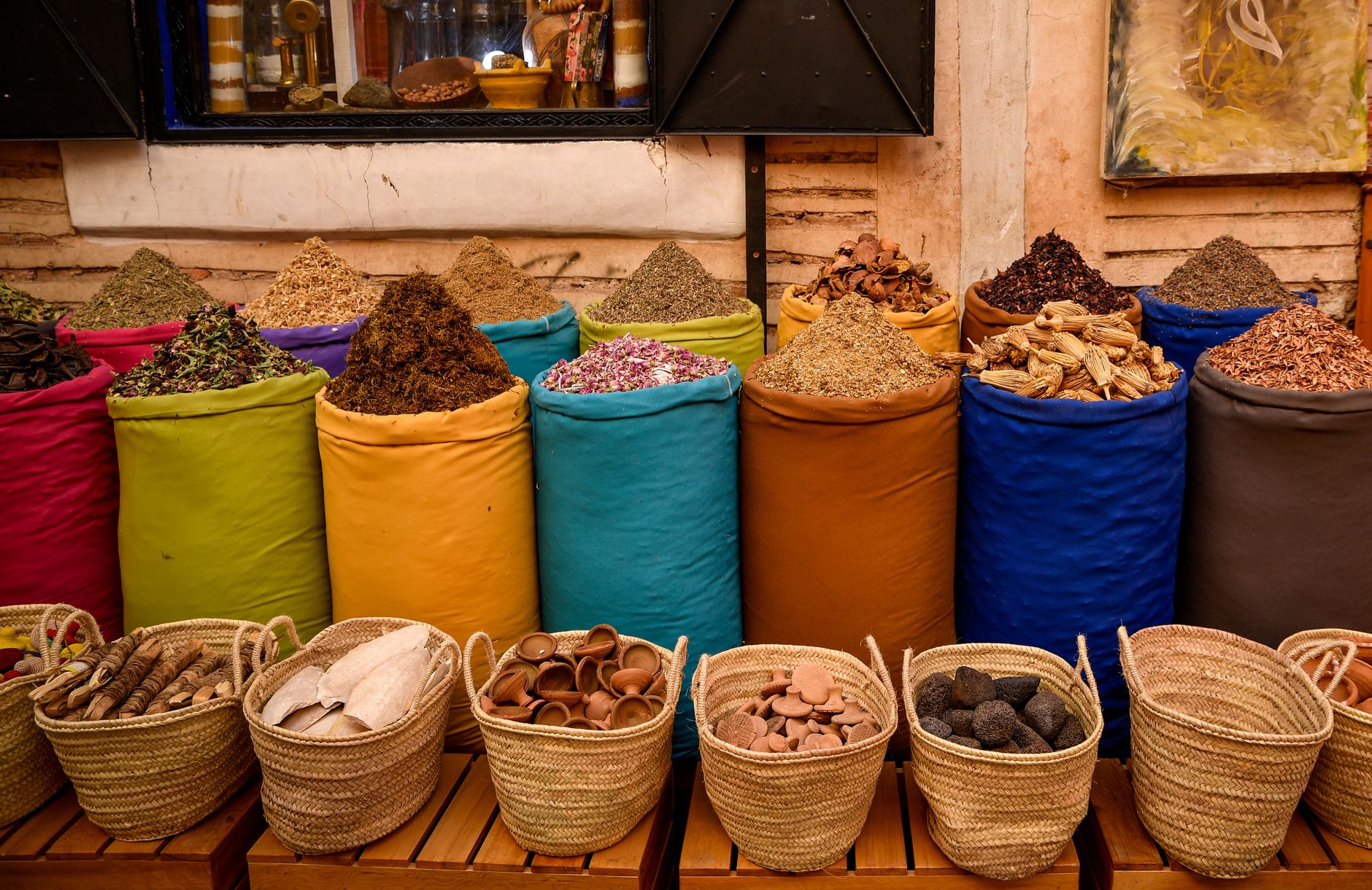
  • Spices. Buy from a busy stall where stock turns over. Fresh cumin, paprika and ras el hanout smell strong and look bright, not dusty. Be wary of pre-ground saffron blends and of anyone who will not let you smell the goods.
  • Kaftans and textiles. A kaftan is the ankle-length formal robe; a djellaba has a hood and is worn more day to day. Check the stitching inside the seams, and rub a damp cloth on a hidden corner to see whether the colours run.

Red flags to walk away from

Most traders are honest and the ritual is friendly. But a few set-ups exist specifically to part visitors from their money:

  • Fake argan. Clear plastic bottles, rock-bottom prices, a greasy texture that sits on your skin, or a cooperation staffed entirely by men. Genuine cooperatives show you women cracking and pressing the nuts, and sell in dark glass.
  • Antique rugs. Old and rare justify huge numbers, but age is hard to prove and easy to fake through sun-fading, chemical washing or deliberate wear. Buy on the weave, wool and design you can see, not on a story.
  • Pressure tactics. A shop that blocks the door, wraps an item before you have agreed a price, or stages outrage at a low offer. You can always leave; a raised voice is a reason to, not a reason to pay.
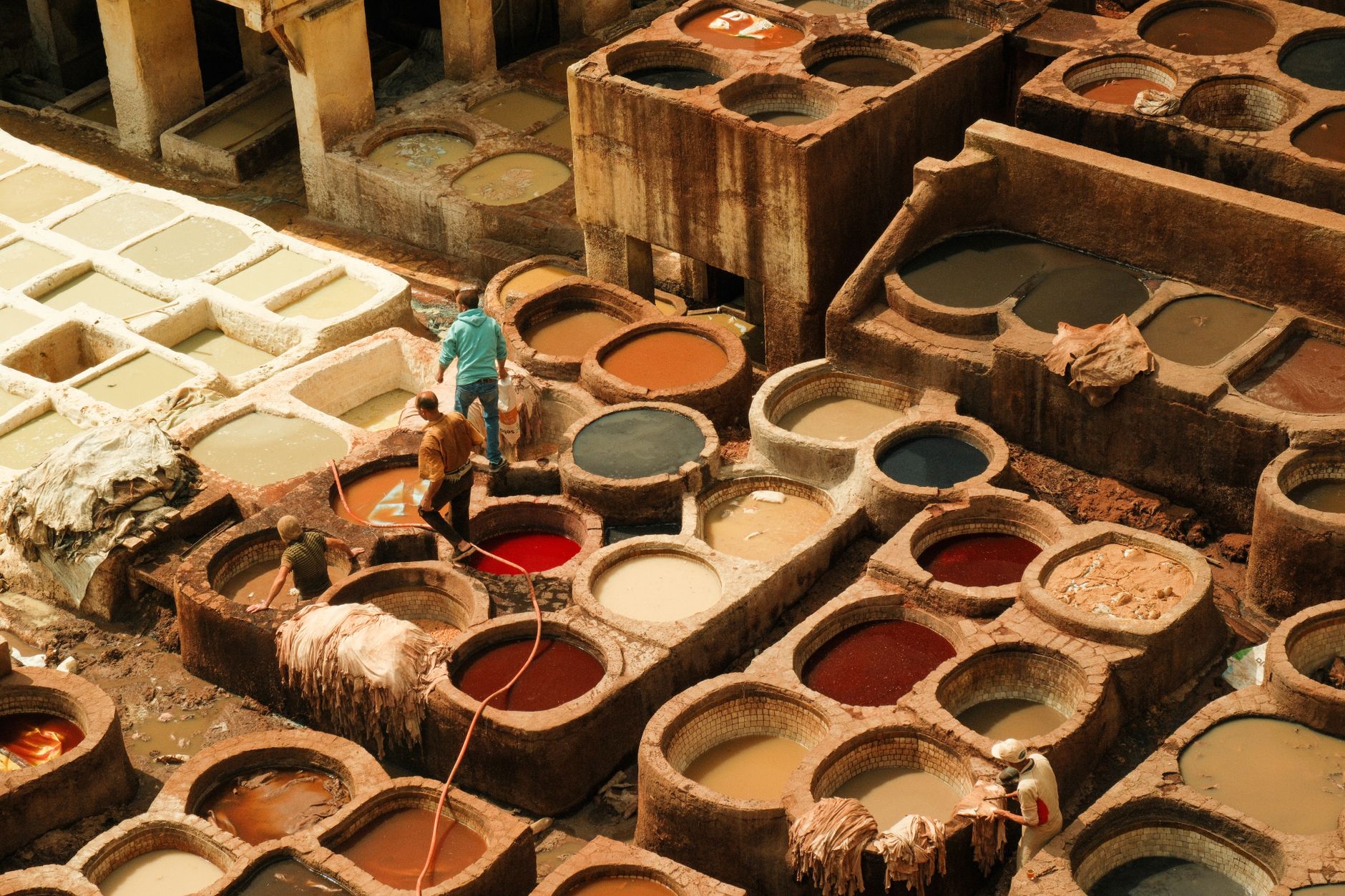
  • The tannery guide. In Fes, a stranger offers to walk you to the Chouara tannery, hands you a sprig of mint, then steers you into a specific leather shop for a commission. You can see the tannery from the surrounding terraces for free or a small tip; you do not need the escort.

Marrakech: from Jemaa el-Fna into the souks

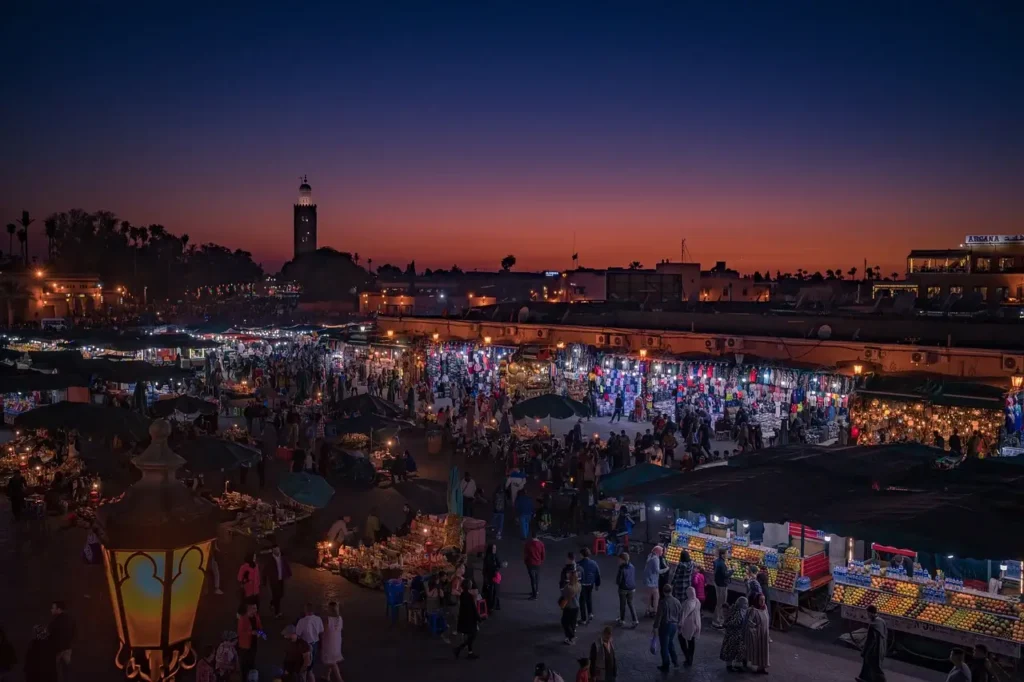
Start at Jemaa el-Fna, the square that becomes a food market every evening, and walk north into the covered alleys. Souk Semmarine is the main artery: it climbs from the square towards Ben Youssef, roofed with reed screens that throw striped light across the stalls, and it is the busiest, most touristy stretch. Use it to get your bearings, then turn off into the side lanes where the workshops are and prices soften.

The specialist souks are the real draw: Souk des Tapis for carpets, with pieces hung from every wall; Souk Cherratine for leather; Souk des Teinturiers for the dyers' hanging wool; and Rahba Kedima, the spice square, for herbs and blends. Mornings are calmer and the light is better, but the lanes are also full of scooters, so keep to one side and expect to get turned around, that is normal.

A narrow medina street in Marrakech lined with shopfronts

Fes: the deepest medina in Morocco

Fes el-Bali is the largest car-free urban area in the world and the closest thing to a working medieval medina you can walk through: thousands of lanes, donkeys, and craft districts that have barely changed. It is also the best place in the country to buy leather and ceramics with provenance, because much of it is made a few streets away.

The Chouara tannery, near Seffarine Square, is the largest of the city's working tanneries, a sunken grid of stone vats you view from the terraces of the surrounding leather shops, usually for a small tip. For pottery, many pieces sold as Fes blue are made in the Aïn Nokbi potters' quarter just outside the medina, where you can watch pieces being thrown, painted freehand and double-fired. Buying close to the source usually beats medina markups.

The medina of Fes with its narrow lanes and craft workshops

Agadir: Souk El Had

Agadir's Souk El Had is a different beast from the medina warrens: a walled market of roughly 13 hectares behind a high perimeter wall, entered through more than a dozen numbered gates and holding several thousand stalls, which makes it one of the largest urban markets in Africa. Inside, the wings are organised by trade, produce and spices in the centre, leather, jewellery, furniture and souvenirs in their own sections.

It is open six days a week, roughly from morning until early evening, and closed on Mondays for cleaning. Sunday, the had that gives the market its name, is the busiest and most colourful day. Prices are negotiated rather than marked and most stalls are cash-only, so bring small notes and visit mid-morning on a weekday if you want room to think.

Guides, commissions and taxis

In the medinas, anyone who offers to show you a special shop is usually paid a commission by that shop, and that commission is baked into the price you are quoted. A polite no, thank you is enough; a licensed guide booked through your riad or a tour company is a different, paid arrangement and worth it if you actually want a guided walk.

For taxis, agree the fare before you get in, or insist the petit-taxi meter is switched on; airport and intercity runs are often best booked as a private transfer with a fixed price. You will also be offered help finding the way, and in the medina that help sometimes ends with a demand for a tip. Carrying a few dirhams for genuine assistance is fine; being marched to a cousin's shop is not.

Getting rugs and fragile things home

Small kilims and poufs compress into a suitcase; large pile rugs and ceramic sets do not, so decide how it travels before you buy. Most established rug and pottery shops ship with DHL, FedEx or Poste Maroc (Amana), typically taking about a week by courier or a few weeks by post, with shipping on a medium rug usually running several hundred dirhams and up.

Two rules protect you. First, before anything is wrapped, photograph the exact piece and get its measured dimensions and the shipping cost in writing. Second, refuse any offer to write a fake low value on the customs invoice: a low declared value caps your insurance and can land the parcel in customs trouble. Ask who insures it, keep the receipt, and request a certificate of origin for anything expensive.

Etiquette, cash and closing time

A few habits make the whole thing easier. Ask before photographing people and do not shoot inside shops without permission; dress modestly, covering shoulders and knees, especially outside the tourist quarters. During Ramadan, opening hours shift and many places close in daylight, so shop in the late afternoon and evening.

Carry cash in small dirham notes; many stalls will not take cards and change is always short. Friday is a working day in Morocco, but shops around mosques often shut or thin out around midday prayers, and several medinas feel sleepy on Friday afternoon. Go early, keep your sense of humour, treat the price as a conversation rather than a fight, and you will come home with something you actually chose.

Begin your adventure

Your dream Morocco trip starts here

Tell us where you want to go, when, and at what pace, we'll craft a tailor-made itinerary with private transport, hand-picked riads and local guides.