Skip to content
Taroudant, Morocco
Souss Valley

Taroudant and the Souss Valley: Morocco's Little Marrakech

Most people drive past Taroudant on the way from Agadir to the desert, see a ring of ochre walls from the window and keep going. That is their loss; and your advantage. Here is what the town is good at, what it is not, and how to fold it into a southern Morocco trip without pretending it is Marrakech.

Eddyafa Travel
Journal
In this article6 min read

Why Taroudant slips under the radar

Taroudant sits about 80 km inland from Agadir, on the flat, fertile floor of the Souss Valley, with the High Atlas on one side and the Anti-Atlas on the other. Most travellers land at Agadir, head north to Essaouira or east to the desert, and never turn off the main road. That is exactly why the town works.

It is walled, ochre and quiet, and it carries the nickname "Little Marrakech"; sometimes "the grandmother of Marrakech", since it was a regional capital long before Marrakech grew. The comparison is fair about the walls and the colour, and slightly unfair about everything else: there is no Djemaa el-Fna, no palace circuit, no crowd. Give it one or two nights and it rewards you slowly.
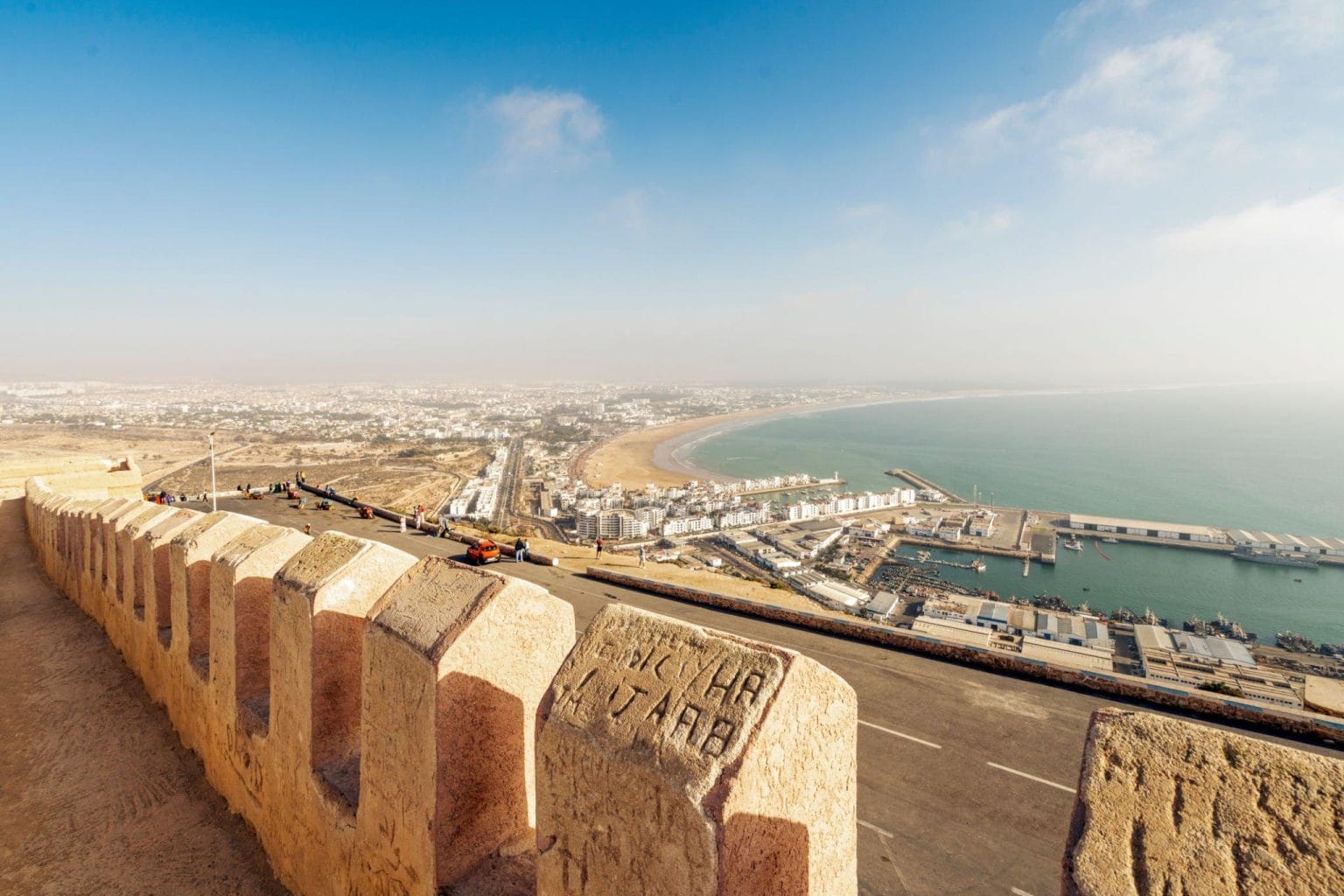
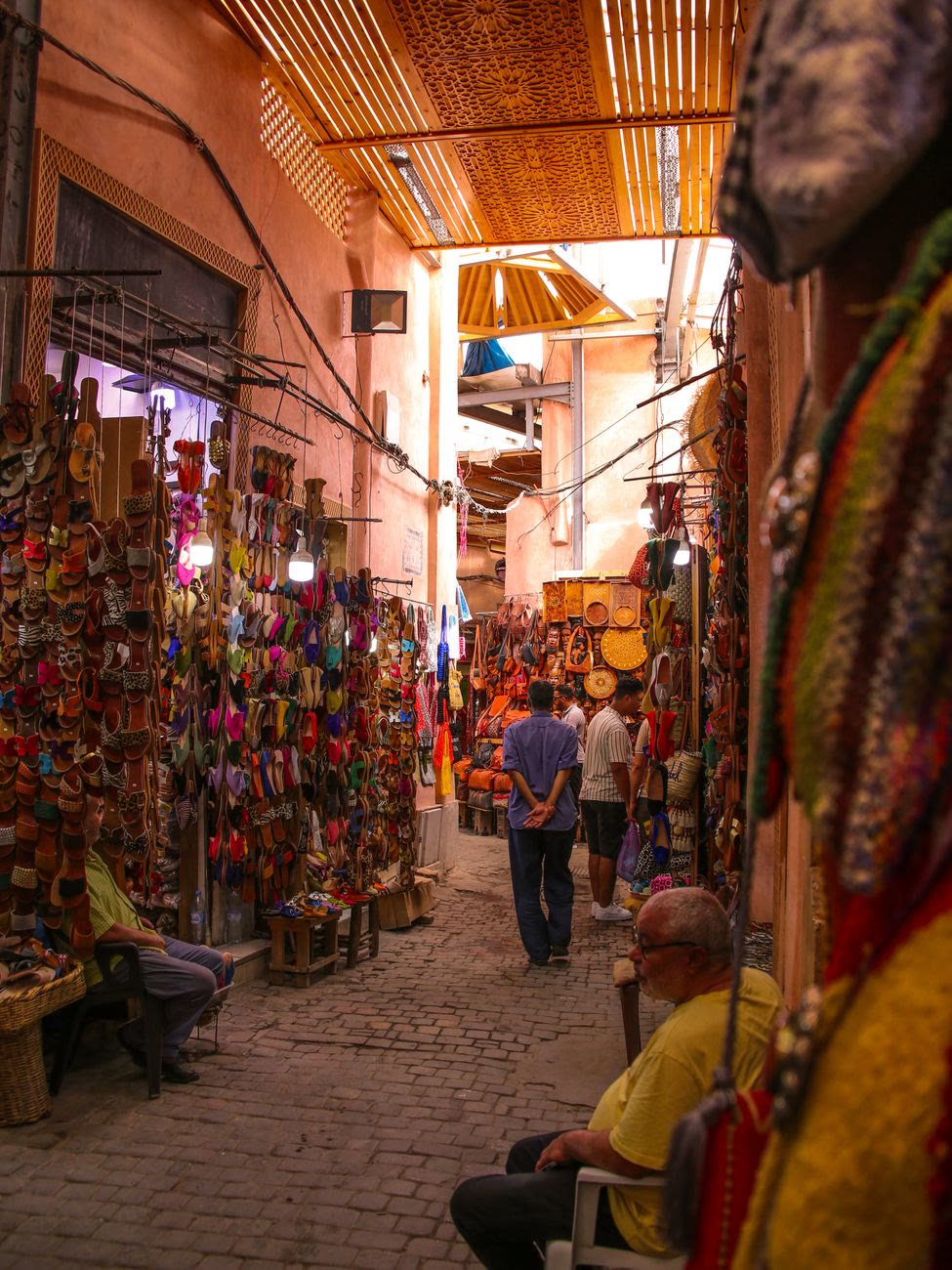
The ramparts, and why they are the reason to come

Taroudant's defining feature is a complete circuit of red-ochre pisé walls, roughly seven and a half kilometres around, built largely in the 16th century under the Saadian dynasty and studded with towers and nine gates that are still in daily use. It is the most intact set of city walls in Morocco, and unlike Marrakech's you can trace the whole loop without losing the wall behind a car park.

Walk it in the late afternoon, when the rammed earth turns honey-coloured and the light rakes along the towers, or take a horse-drawn calèche from near the main square for a tour of the outside. Bab el-Kasbah and Bab Targhount are the gates to remember, and the old tanneries sit close to the walls. There is no ticket and no gatekeeper; the walls are simply the edge of everyday life here.

The souks, and the absence of a crowd

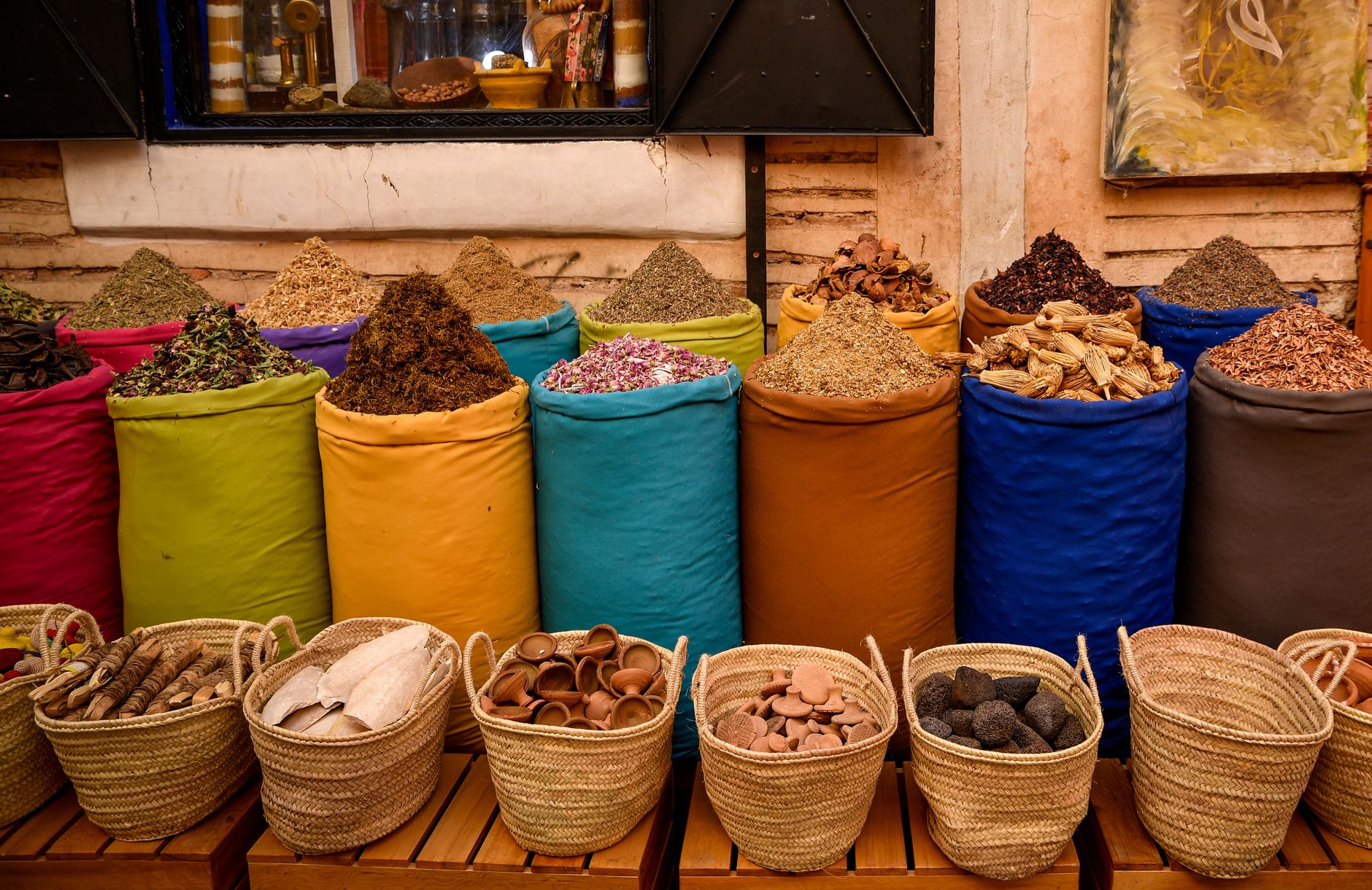
Taroudant has two markets that matter: the Arab souk and the Amazigh (Berber) souk, both inside the walls and a short walk from Place Assarag. You will find silver Amazigh jewellery, leatherwork, spices, baskets and the ordinary household goods a working town actually buys, not a tourist bazaar arranged for photographs.

The rhythm is the reward. Mornings are for produce and errands, afternoons thin out, and weekly market days pull villagers in from the surrounding douars. Prices are negotiable but gentler than in Marrakech, and nobody follows you down the lane. It is the rare Moroccan medina where you can browse without an audience.

What Taroudant is, and what it isn't

  • It is: a calm, genuine walled town and a comfortable base, somewhere to eat well and sleep without noise.
  • It isn't: a monument destination. There is no grand palace, no museum circuit, and barely any nightlife.
  • Come for: the walls at sunset, the souks, the slow pace, and the position; Agadir, Tioute, Taliouine and the Anti-Atlas are all within reach.
  • Don't come for: the bustle of Marrakech. If that is what you want, stay in Marrakech.
  • One or two nights is the honest amount. A rushed half-day from Agadir shows you the walls and nothing of the town's mood.

The Souss Valley: argan, citrus and the plain between two ranges

The Souss is Morocco's agricultural engine: kilometre after kilometre of citrus groves, banana plantations, tomato fields and, most famously, argan trees, the thorny, slow-growing species that exists essentially only here and in a strip of south-west Morocco. The road between Agadir and Taroudant runs straight through it.

Argan oil is the valley's other currency. Cooperatives along the N10, many of them run by women, press the kernels for cooking and cosmetics, and most are glad to explain the difference between the toasted culinary oil and the raw cosmetic grade. Stop at one on the way; a cooperative is a better education than any label. The famous photo of goats standing in the branches of an argan tree is real, and the trees are grazed this way.

the Souss Valley near Agadir

Taliouine and the saffron harvest

East of Taroudant, the N10 climbs toward the Anti-Atlas and reaches Taliouine, the saffron capital of Morocco. The cool nights, dry days and high terraced fields of the Souktana plateau around the town produce the great majority of the country's saffron, sold under a protected origin label, AOP Safran de Taliouine.

The harvest is short and intense: roughly from late October into mid-November, when the crocus flowers open for barely a day. They are picked at dawn, before the sun wilts them, and the three red stigmas inside each flower are separated by hand the same day, mostly by women in the cooperatives. It takes well over a hundred thousand flowers to make a single kilo, which is why the spice costs what it does. The oldest cooperative dates to 1979, and visitors are welcome to watch the sorting and drying and to buy sealed, weighed saffron; each November the town also holds a saffron festival.

Taliouine in the Anti-Atlas

Tioute: a kasbah over an oasis

About 30 km southeast of Taroudant, a side road leaves the Taliouine road and ends at Tioute, where a 16th-century Saadian kasbah sits on a rocky spur above a palm grove of some twenty thousand trees, fed by a web of irrigation channels and shared between the villages below.

The kasbah is part ruin, part restaurant, and it is known locally for a different reason: it stood in for Ali Baba's hideout in the 1954 French film Ali Baba et les Quarante Voleurs, shot with Fernandel. The view from the hill takes in the green sea of palms, the Souss plain and, on a clear day, snow on the High Atlas. Wander down into the grove on foot or by donkey; it takes half a day.

Into the Anti-Atlas villages

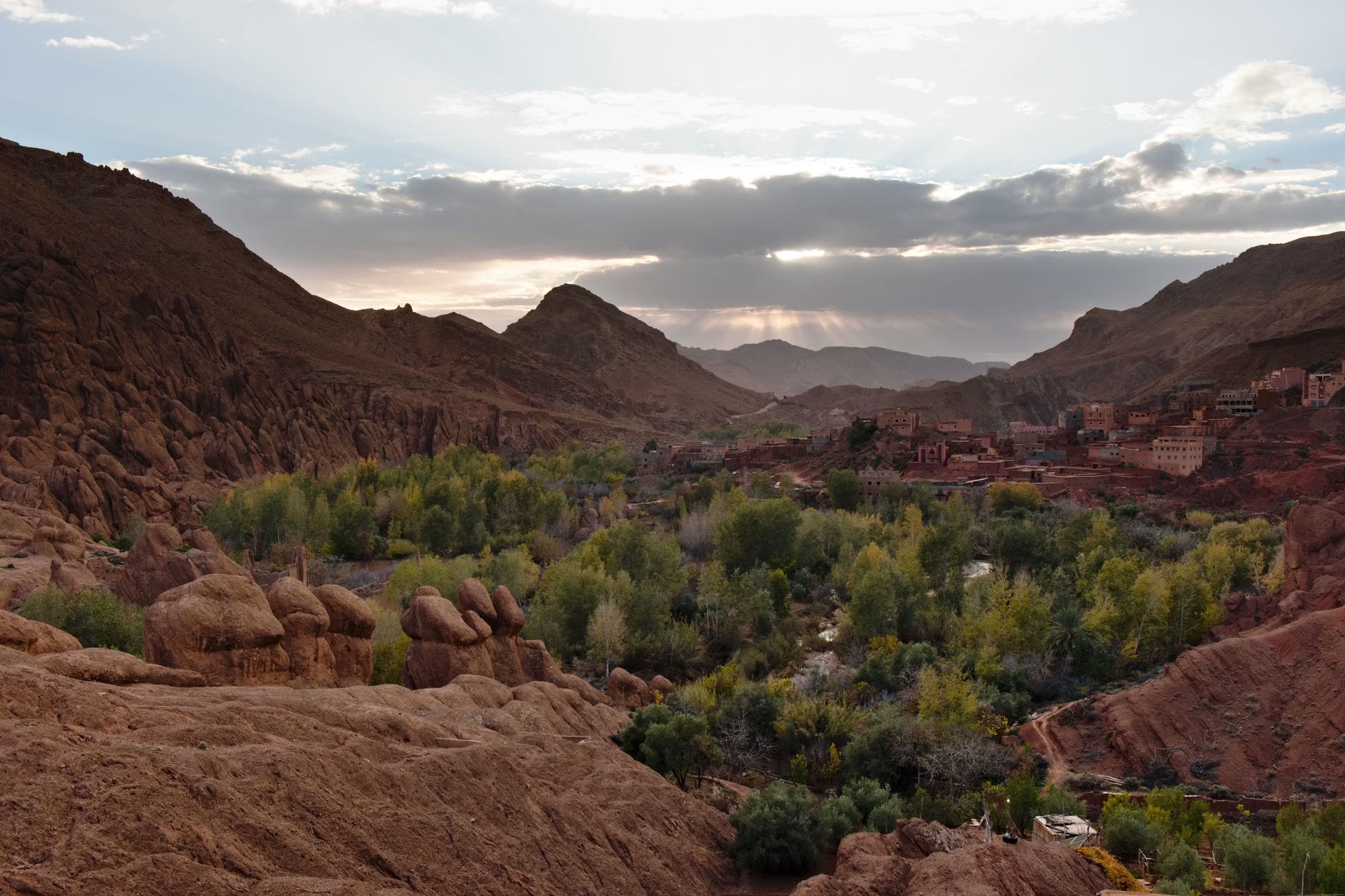
Taroudant is the doorway to the Anti-Atlas, the drier, older range that runs along the southern edge of the Souss. The road east to Taliouine and on toward Tafraoute passes terraced fields, almond and olive trees, and villages of stone and pisé whose daily rhythm has barely changed in generations.

Push further and the landscape turns to the pink granite and painted rocks around Tafraoute, or north to the volcanic massif of Jbel Sirwa above Taliouine, which trekkers use as a base. These are not polished attractions; they are working mountain country, and the reward is the drive and the people rather than a ticket gate.

How to combine Taroudant with Agadir and the passes

Agadir's Al Massira airport is the natural gateway. The drive to Taroudant is about 80 km on the flat N10, roughly an hour and a quarter, no mountain passes, past citrus orchards and argan groves. That makes the town an easy first or last night of a southern trip, or a base for the Anti-Atlas.

From Taroudant, two very different roads go north to Marrakech. The fast way runs back down to the A7 motorway and up via Agadir and Chichaoua, roughly 3.5 to 4 hours. The dramatic way is the Tizi n'Test over the High Atlas, a narrow, largely unbarriered pass at around 2,092 metres that takes five to six hours and should only be driven in daylight. Take the motorway if you want to arrive; take the Tizi n'Test if the drive is the point.

The honest verdict

Taroudant is not a highlight reel. It is a quiet town that does walls, markets, food and slow evenings well, and it sits at the centre of a valley most visitors only cross at speed. If you have a spare day or two around Agadir, or you are driving between the coast and the Anti-Atlas, it is one of the best-value stops in southern Morocco.

Stay one or two nights inside the walls, walk the ramparts at sunset, eat in the square, and use it as a base for Tioute and Taliouine. Do that and you will understand why locals still call it Little Marrakech; and why they are quietly glad it isn't.

Begin your adventure

Your dream Morocco trip starts here

Tell us where you want to go, when, and at what pace, we'll craft a tailor-made itinerary with private transport, hand-picked riads and local guides.