Skip to content
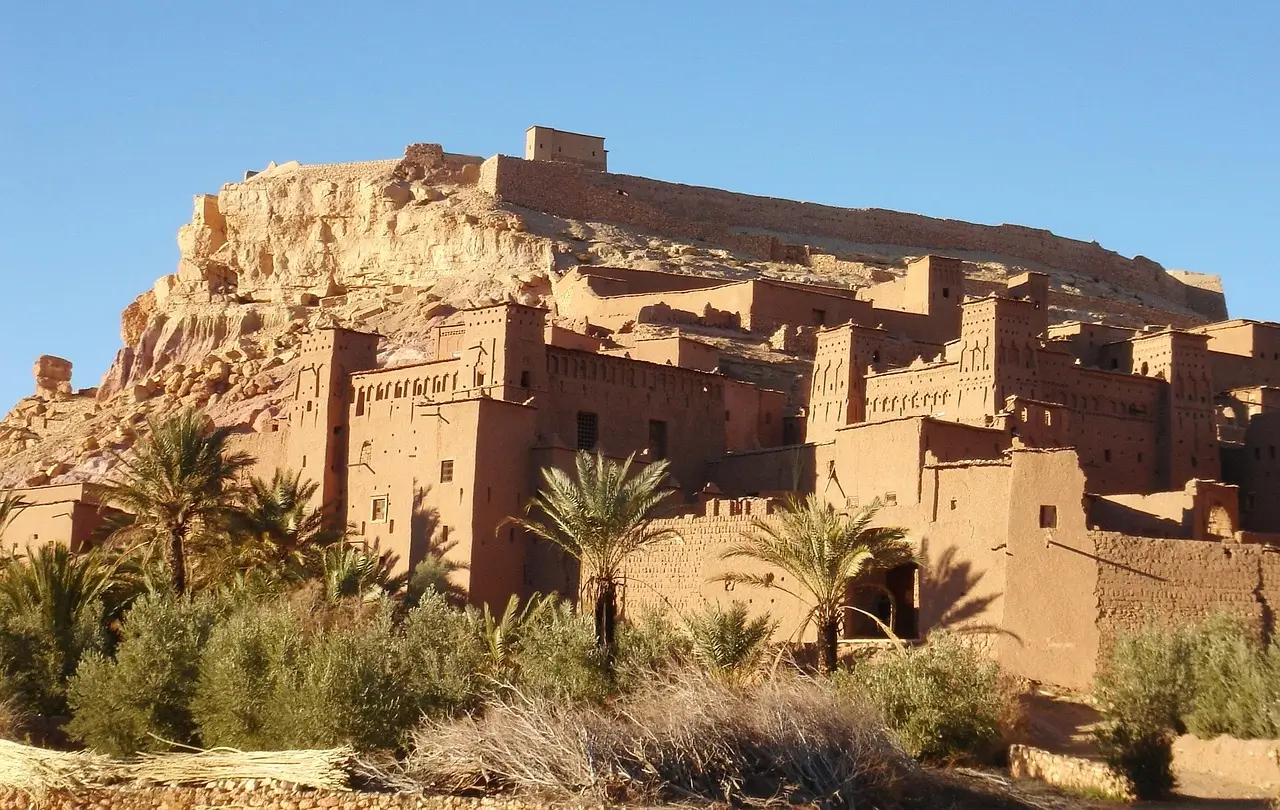
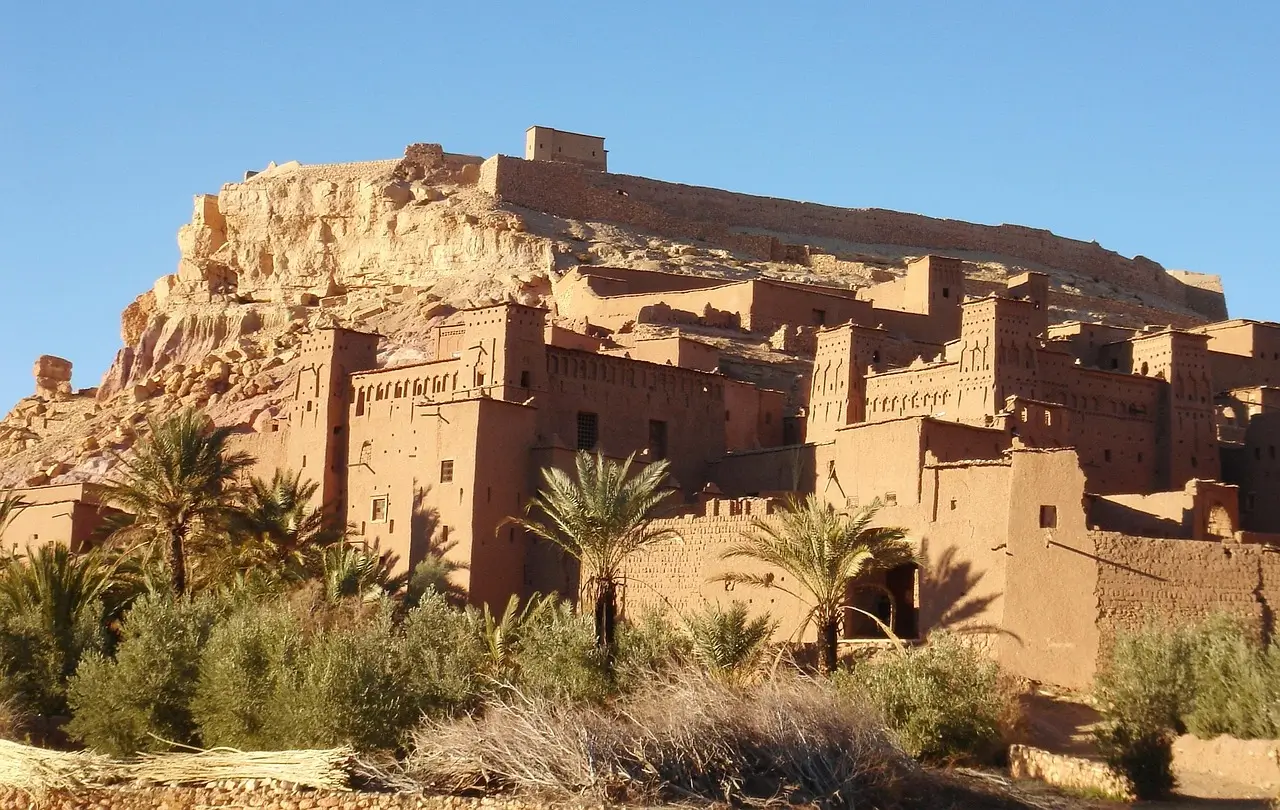
The Aït Benhaddou ksar stacked up its hillside in southern Morocco
Kasbah Route

Aït Benhaddou & the Kasbah Route: Marrakech to Ouarzazate

The road south from Marrakech crosses a 2,260-metre mountain pass, drops into the pre-Sahara and strings together the most photographed earthen village in Morocco, a half-ruined pasha's palace and a film town they still call Ouallywood. Here is what each stop actually is, and how to do the route without turning it into a nine-hour day in the car.

Eddyafa Travel
Journal
In this article6 min read

What Aït Benhaddou actually is

Aït Benhaddou is not one kasbah but a ksar, a fortified earthen village, a whole walled settlement of packed houses, towers and a communal granary stacked up a hillside above the Ounila River, on the old caravan road between the Sahara and Marrakech. It has been a UNESCO World Heritage Site since 1987, listed for the way its pre-Saharan earthen architecture has come down to us largely intact: the clay walls, the corner towers, the tight defensive layout.

People still live here, and that matters. Most families moved across the river to a newer village years ago, but a few keep houses inside the ksar, and the place is maintained rather than frozen. You have probably seen it before you arrive, because of the films: Lawrence of Arabia, The Mummy, Gladiator, Kingdom of Heaven, Prince of Persia and the Yunkai scenes of Game of Thrones all used these walls.
Crossing the Tizi n'Tichka pass

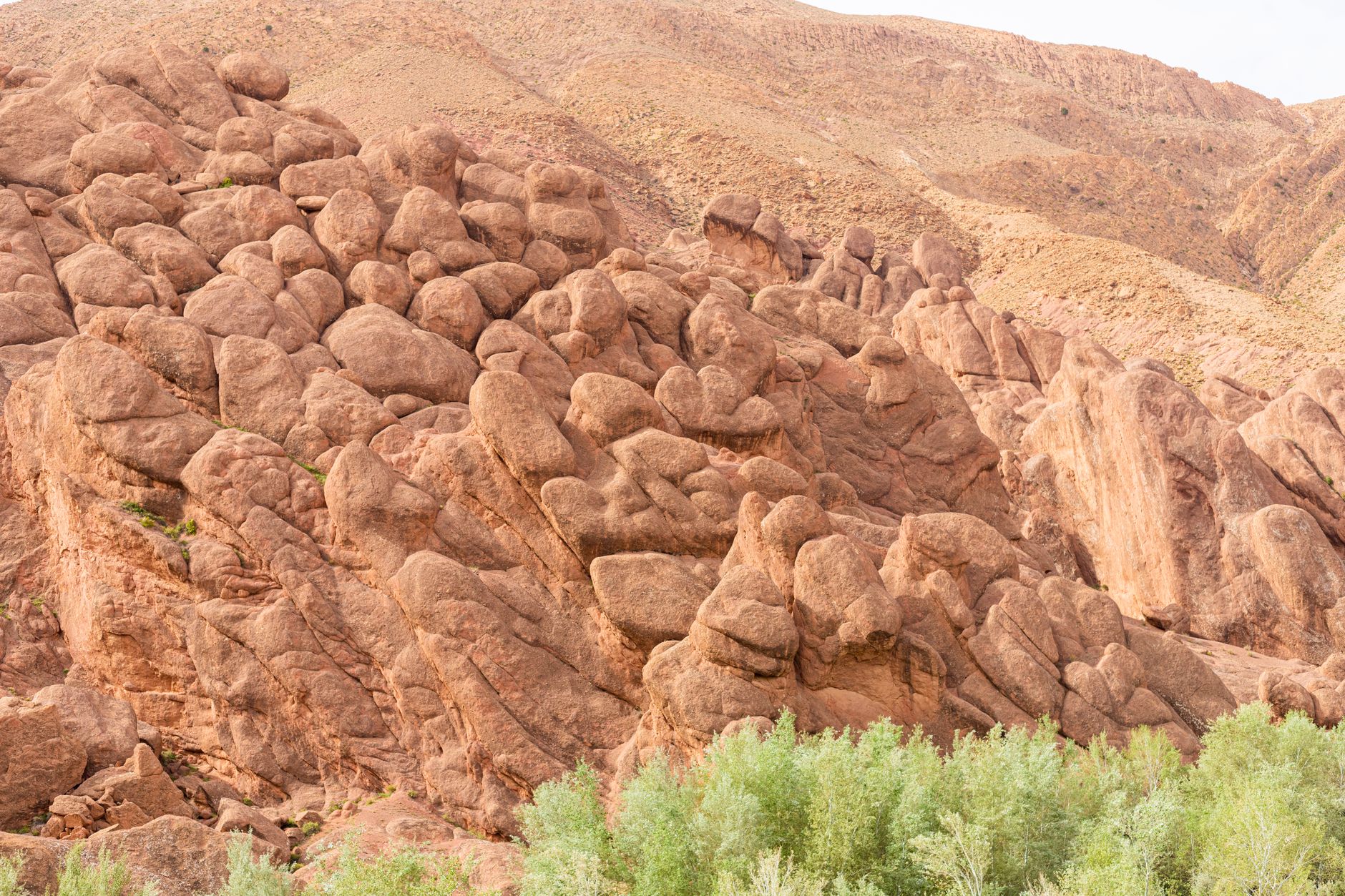
Almost everyone reaches Aït Benhaddou the same way: over the High Atlas on the N9, through the Tizi n'Tichka. The pass sits at around 2,260 m; the number on the sign at the top, and enough to make it the highest major mountain pass in North Africa. A GPS reading in 2022 put the true summit closer to 2,205 m, but either way the climb is real: hours of switchbacks from Marrakech's plain up into bare rock and Berber villages, then a long descent toward the pre-Sahara.

The road was cut by the French military in 1936 along an older caravan trail, and it is still the main artery south. From November through March, snow can slow or close it, so check conditions before you commit in winter. Allow roughly four hours from Marrakech to Ouarzazate rather than the two or three some tours advertise, and more if you stop for photographs and tea.

Telouet and the Glaoui kasbah

About 20 km after the pass, a signed side road drops east to Telouet, the mountain seat of the Glaoui family, the clan that effectively ruled southern Morocco for decades. Construction of the kasbah began around 1860 and continued into the mid-20th century under Thami El Glaoui, Pasha of Marrakech during the French Protectorate. When the family fell from power after independence, the palace was abandoned almost overnight.

Today most of Telouet is a roofless ruin of collapsed rammed-earth walls, but a handful of upstairs reception rooms survive with painted cedar ceilings, zellij tilework and carved stucco intact, imperial-city craft carried up into a mountain village. It is a raw contrast to the polished ksar, and worth the detour if you care about who built these places and why.

Ouarzazate, the film town

Thirty kilometres past Aït Benhaddou, Ouarzazate is the practical base for the whole region and Morocco's film capital. Atlas Studios, opened in 1983 on the road back toward Marrakech, is one of the largest film complexes in the world by area; its backlot still holds standing sets, an Egyptian temple, a Tibetan monastery, Roman streets, a biblical fortress. A guided walk takes roughly an hour, though individual sets can be closed when a production is shooting.

The second complex, CLA Studios, sits a little further out and is usually quieter; the small Cinema Museum faces Kasbah Taourirt in the town centre. Taourirt itself is a 19th-century Glaoui palace, partly restored, with decoration as intricate as Telouet's. Locals call the town Ouallywood, and the nickname is not a joke, the industry runs through the local economy.

Reading the architecture: pisé and tabia

The buildings along this route are made from the ground they stand on. Walls are pisé, rammed earth, called tabia locally, packed layer by layer between wooden shutters and left to dry, then sometimes finished with a clay-and-straw render. Almost nothing is imported, which is exactly why the technique survived for centuries across the Drâa, Dadès, Todgha and Souss valleys.

  • Corner towers and crenellations. Tall towers with geometric patterns in clay brick mark the house of a notable, and give a ksar its whole silhouette.
  • The granary at the top. The communal store, the agadir, sits at the highest and most defensible point of the village; food was the real treasure worth fortifying.
  • Thick, battered walls. Sloped, heavy walls shed rain and hold back the sun, keeping the interior tolerable through baking summer days and near-freezing winter nights.
A Moroccan kasbah of rammed earth with corner towers

The best times to go

Spring (March to May) and autumn (September to November) are the windows to aim for: warm days, cool nights and the clear, low-angled light that makes the earthen walls glow. They are also the busiest, which is the strongest argument for staying overnight instead of day-tripping.

Summer is genuinely hot, the pre-Sahara climbs well above 35°C and midday at the ksar is punishing. Winter brings cold nights and the chance of snow on the pass, though the low sun and thin crowds are lovely if you dress for it. Any season, the site is outdoors and exposed: hat, water and sunscreen are not optional.

How to see it without a rushed day trip

The standard Marrakech day trip is the one to think twice about. It is roughly 190 km each way, about four hours of driving in each direction over a mountain pass, which means eight or nine hours in a vehicle to stand in the ksar for an hour or two in the worst possible light, midday.

Better: overnight somewhere in the area, at Aït Benhaddou itself or in Ouarzazate, and walk the village at sunrise or sunset when the walls turn orange and the buses have gone. Better still, fold it into a two- or three-day run toward the Drâa Valley or the dunes, so the pass is crossed once and paid for with real time on site rather than a there-and-back slog.

Practical logistics

Distances are short on the map and slow on the ground. Marrakech to Aït Benhaddou is around 190 km, call it three and a half to four hours with stops. Aït Benhaddou to Ouarzazate is only about 30 km, or half an hour. The Telouet detour adds roughly 20 km off the N9, and the Ounila Valley back road from Telouet down to Aït Benhaddou is around 40 km of partly unpaved track that can take an hour and a half to two, spectacular, but check conditions after rain.

To enter the old ksar you cross the Ounila River, usually by stepping stones or a low footbridge, from the newer village on the near bank. Entry to the ksar itself is generally free, but the local guides who walk you across will ask a modest fee, and it is worth it for the granary at the top and the film stories. Bring cash, go gently in the narrow alleys, and if you want the classic photograph, the light is best early and late, not at noon.

Earthen towers of the Aït Benhaddou ksar above the riverbed

The route, put together

The version that works: leave Marrakech early, cross the Tizi n'Tichka, detour to Telouet, then take the Ounila Valley road down to Aït Benhaddou and sleep there or in Ouarzazate. Spend the first evening and the next morning in the ksar, see the studios and Taourirt in Ouarzazate, then either loop back or continue south toward the desert. That one change, a night on the far side of the mountains, turns a famous checklist photo into the part of the trip you actually remember.

You do not need to be a film buff or a historian to enjoy it, but a little context is the difference between a pretty village and a place that explains a thousand years of trade, power and earthen building. Go slowly, tip your guide, and let the light do the rest.

Begin your adventure

Your dream Morocco trip starts here

Tell us where you want to go, when, and at what pace, we'll craft a tailor-made itinerary with private transport, hand-picked riads and local guides.