Skip to content
Morocco travel photography
Photography

Photographing Morocco: Where, When and How to Shoot

Morocco is easy to photograph badly, because the light is hard from about ten in the morning until four. This guide sets out the shooting windows that work, the drone rules, how to ask before photographing people, and the kit that survives dust in the desert and the medina.

Eddyafa Travel
Journal
In this article8 min read

What makes Morocco hard, and worth the effort

The sun sits high and the air is clear, so contrast runs very high. By ten in the morning the shadows under awnings and in doorways are black, and skin turns to blown highlights. That is the whole technical problem of photographing here, and most of this guide is about working around it.

The reward is that the country gives you everything in a short radius: medina lanes, high mountain passes, sand dunes, Atlantic ramparts and blue-walled streets. You can shoot four completely different subjects inside one week without long drives.

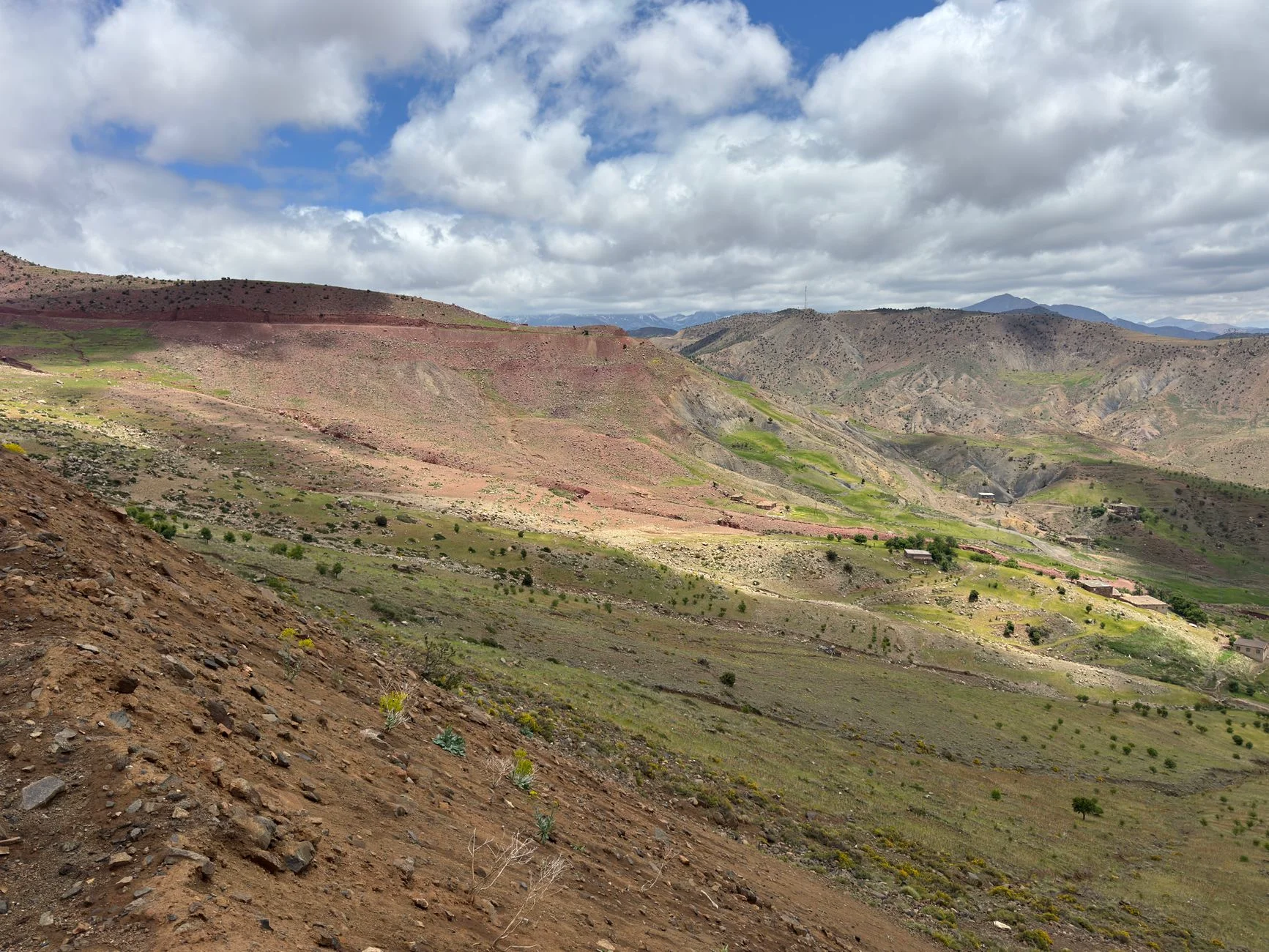
The distances that matter: Marrakech to the Tizi n'Tichka pass is about 100 km, Marrakech to Essaouira is roughly 190 km, and Marrakech to Merzouga is around 560 km. Plan them as separate trips rather than one loop if photography is the point.
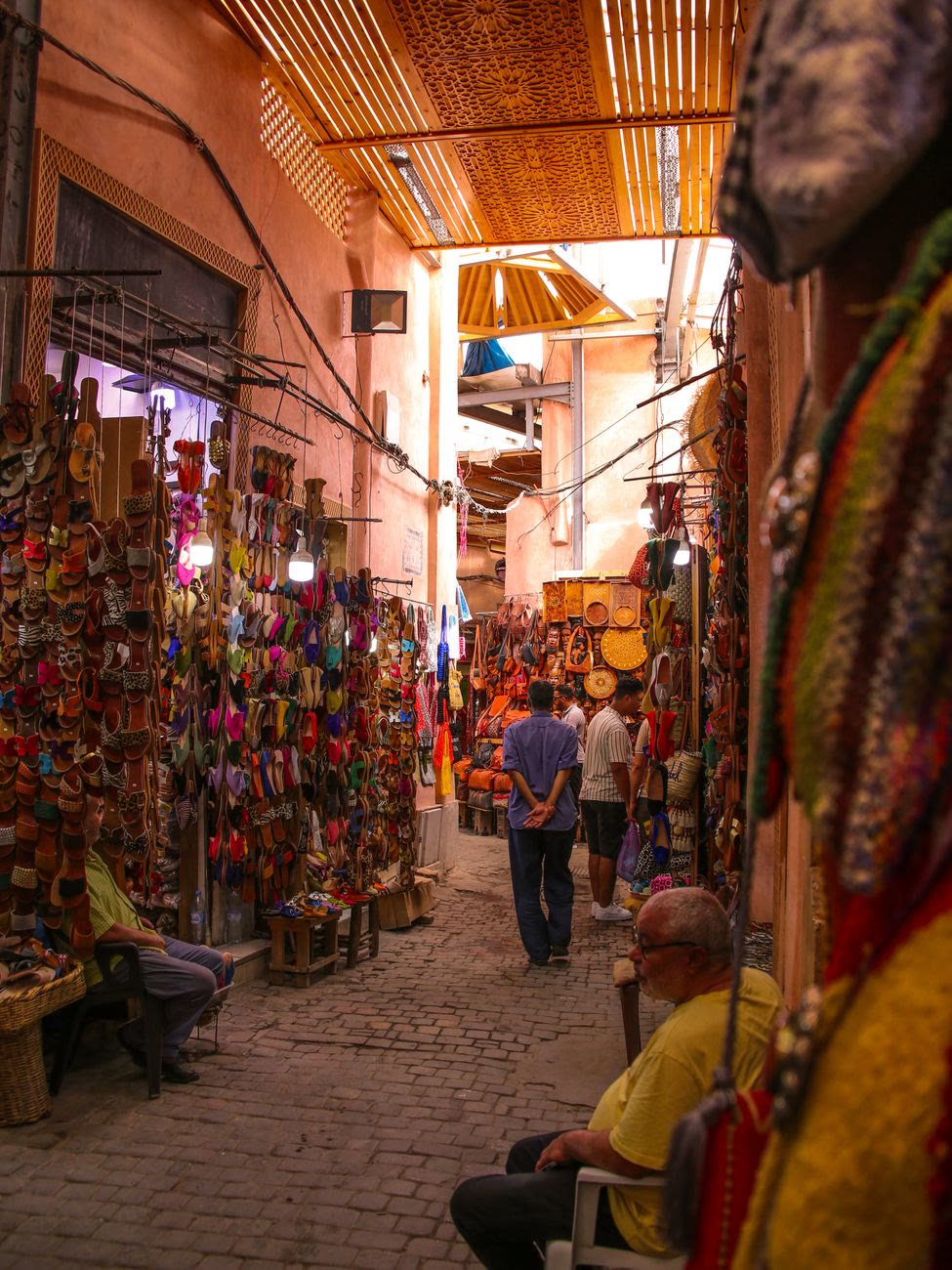
Lively street in a Moroccan medina

The light: when to shoot and when to rest

The reliable windows are the first two hours after sunrise and the last two before sunset. In winter that is roughly 7:30 to 9:30 and 16:30 to 18:30; in summer, roughly 6:30 to 8:30 and 18:30 to 20:30. Outside those windows the sun is overhead and the light is hard and flat.

Midday is not lost time. It is the time to shoot inside: riads, courtyards, medina alleys where buildings block the sun, and interiors lit through a single window or a screen of carved plaster.

Check sunrise and sunset times for the exact date before you travel. Morocco sits on its own time zone, on permanent UTC+1, which shifts against European clocks in spring and autumn and catches people out when they plan a shoot.

  • Before sunrise. Jemaa el-Fna and the medina lanes are nearly empty. This is when you get clean frames without crowds.
  • First two hours. Warm light at a low angle. Best for medinas, facades, dunes and streets.
  • Midday. Shoot interiors, riads and alleys in shade, or rest and back up your cards.
  • Last two hours. The strongest light of the day. Dunes, ramparts, tanneries from terraces, Jemaa el-Fna as it fills.
  • After dark. Jemaa el-Fna food stalls, medina lanterns, and long exposures on a tripod.

Drone rules and permits

Bringing a drone into Morocco requires prior authorisation from the Moroccan authorities, handled through the Ministry of Communication and civil aviation. This is arranged before you travel, not on arrival. Without a permit, importing a drone is treated as a customs matter, and the equipment can be held.

The practical rule: assume you cannot fly one unless you have arranged the permit in advance. If you have no permit, leave the drone at home rather than risk it being seized at the border.

Where flying is never acceptable, permit or not: over people, over mosques, over military or police sites, over palaces, and over or near airports. These are the lines that end a trip badly.

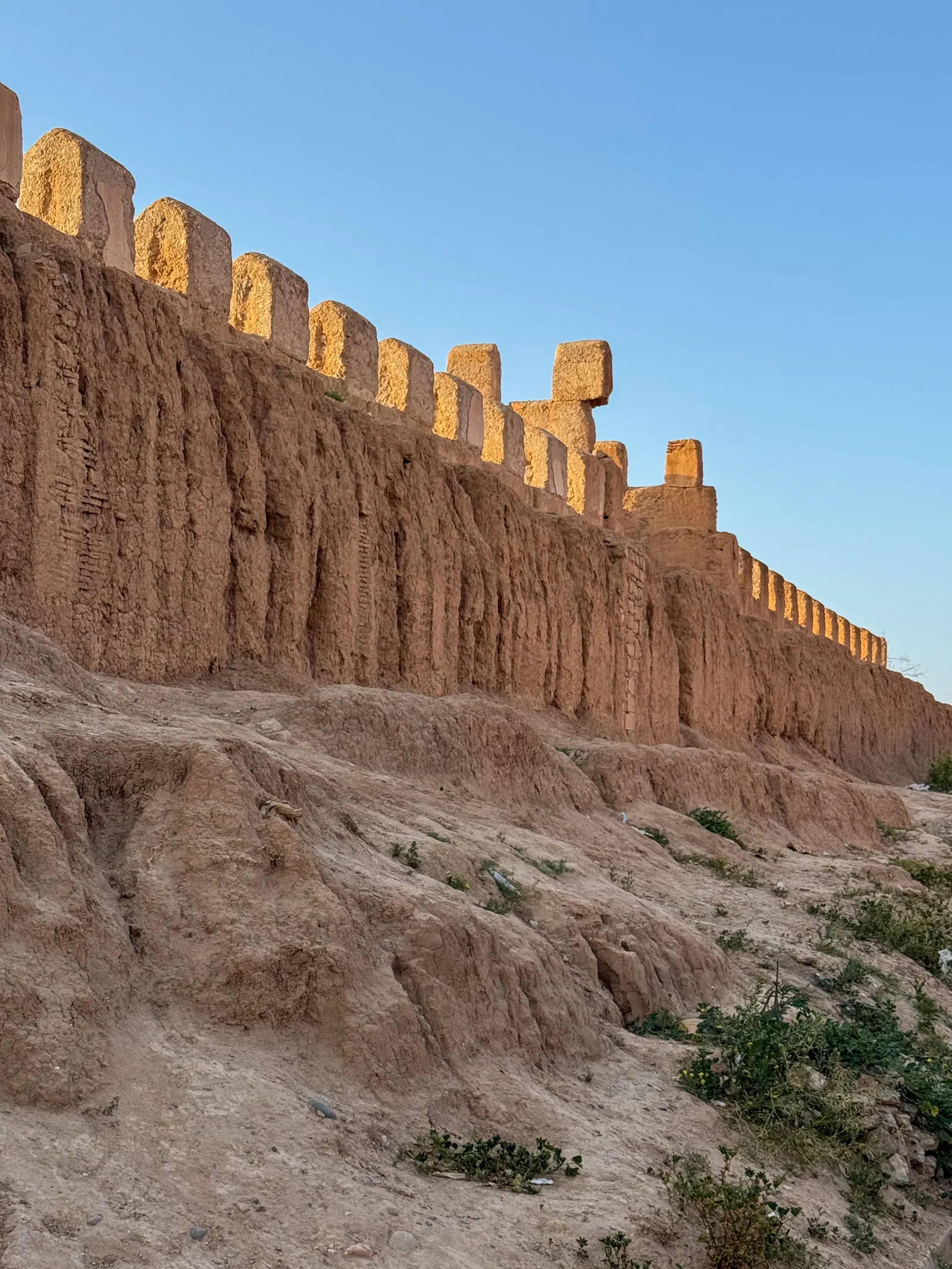
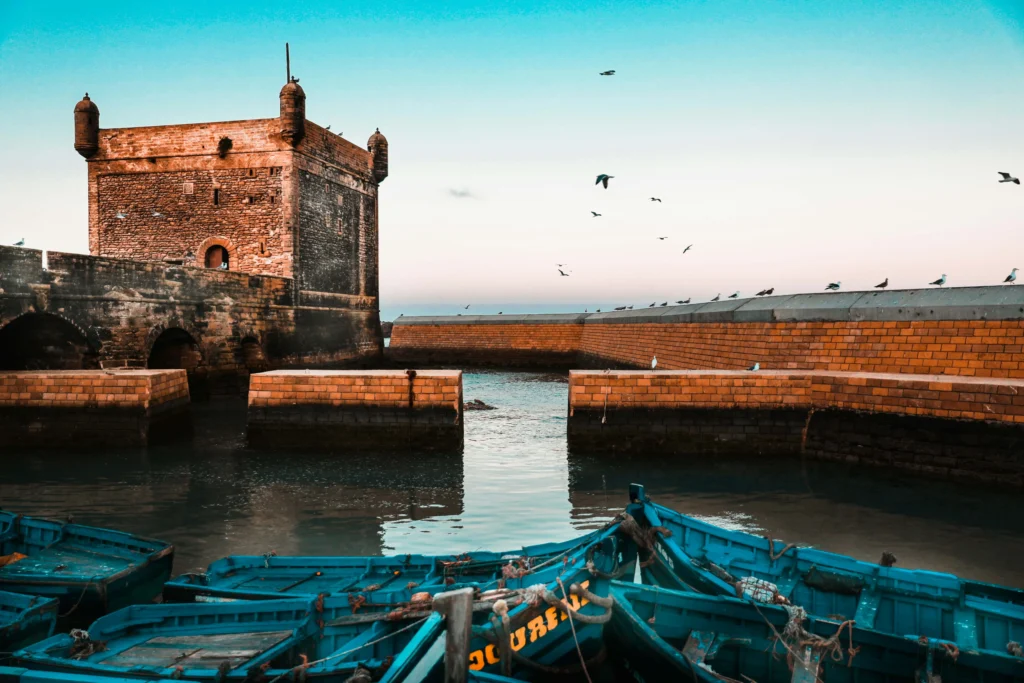
Essaouira seafront ramparts

Photographing people and asking permission

Photographing in public space is generally fine. Photographing individual people is a different matter, and asking first is the norm here. A gesture at the camera and a questioning look is usually enough; if the answer is no, move on.

In tourist areas some people will ask for money after being photographed. The way to avoid trouble is to agree the price before you raise the camera, or to decline and walk away. Both are normal and neither causes offence.

Some people, particularly in rural areas and among older women, prefer not to be photographed at all. Respect that. Do not shoot from a distance to hide what you are doing; it is usually noticed and it sours the exchange.

  • Ask first, with a gesture and a smile, before raising the camera.
  • Agree any price before the shot, not after.
  • Accept a no without arguing, and do not shoot anyway.
  • Never shoot people from a distance to conceal the camera.
  • A 35mm or 50mm lens keeps you close and visible, which is the honest way to work here.

Mosques, souks and interiors

Mosque interiors are generally closed to non-Muslim visitors. The notable exception is the Hassan II Mosque in Casablanca, which non-Muslims may visit on guided tours at set times; check the current tour schedule when you arrive in the city. Exteriors can be photographed freely.

In the souks, vendors may object to having their wares or stall photographed without a purchase. Asking is normal and often fine. A short conversation, sometimes a small purchase, usually settles it, and many traders are happy to be photographed once the question has been asked.

Tanneries in Marrakech and Fes are viewed from surrounding terraces, usually reached through a leather shop. You will be offered mint leaves for the smell. Afternoon light across the dye pits is better than midday, when the pits read flat.

The desert: Merzouga and the dunes

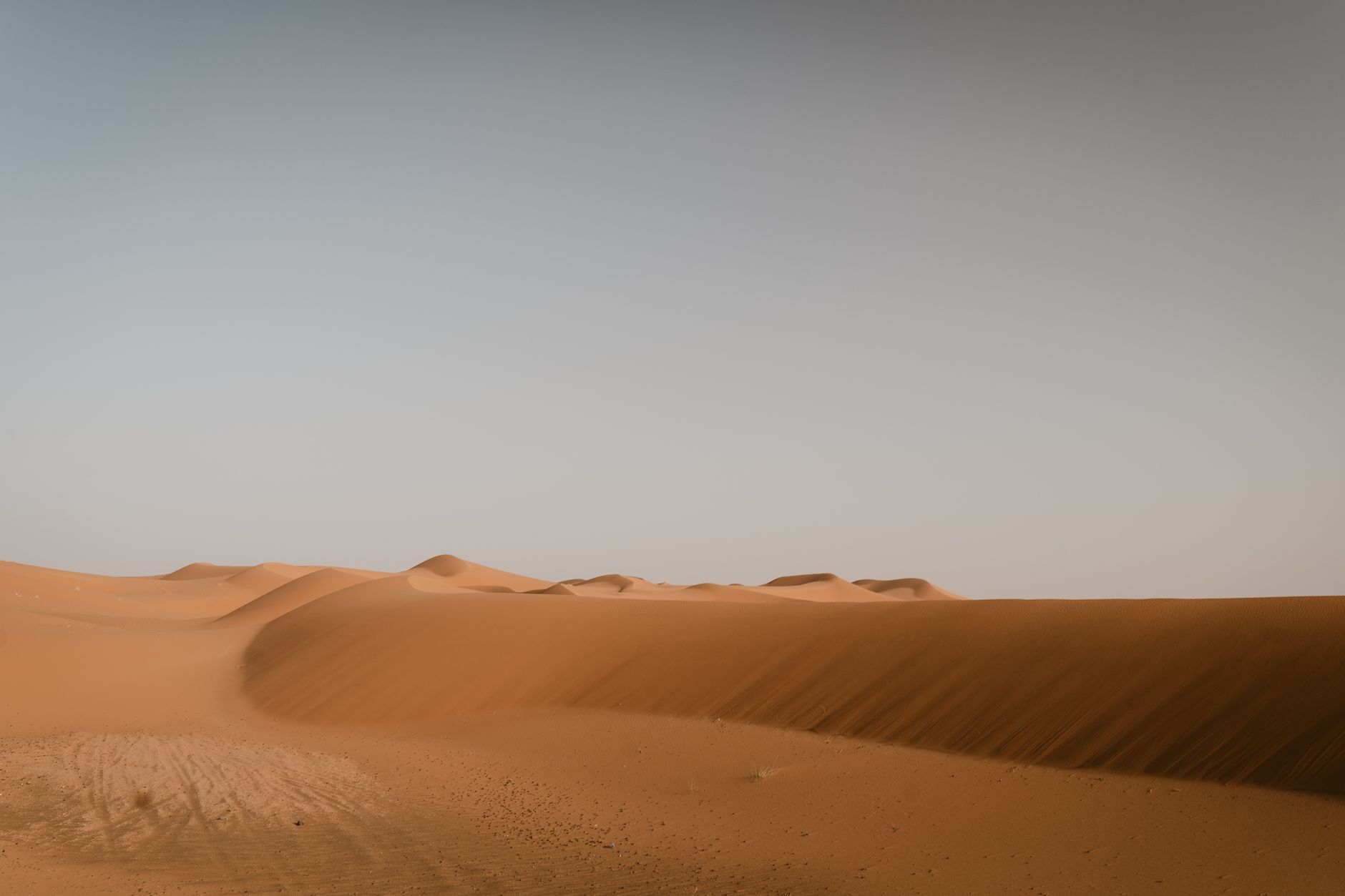
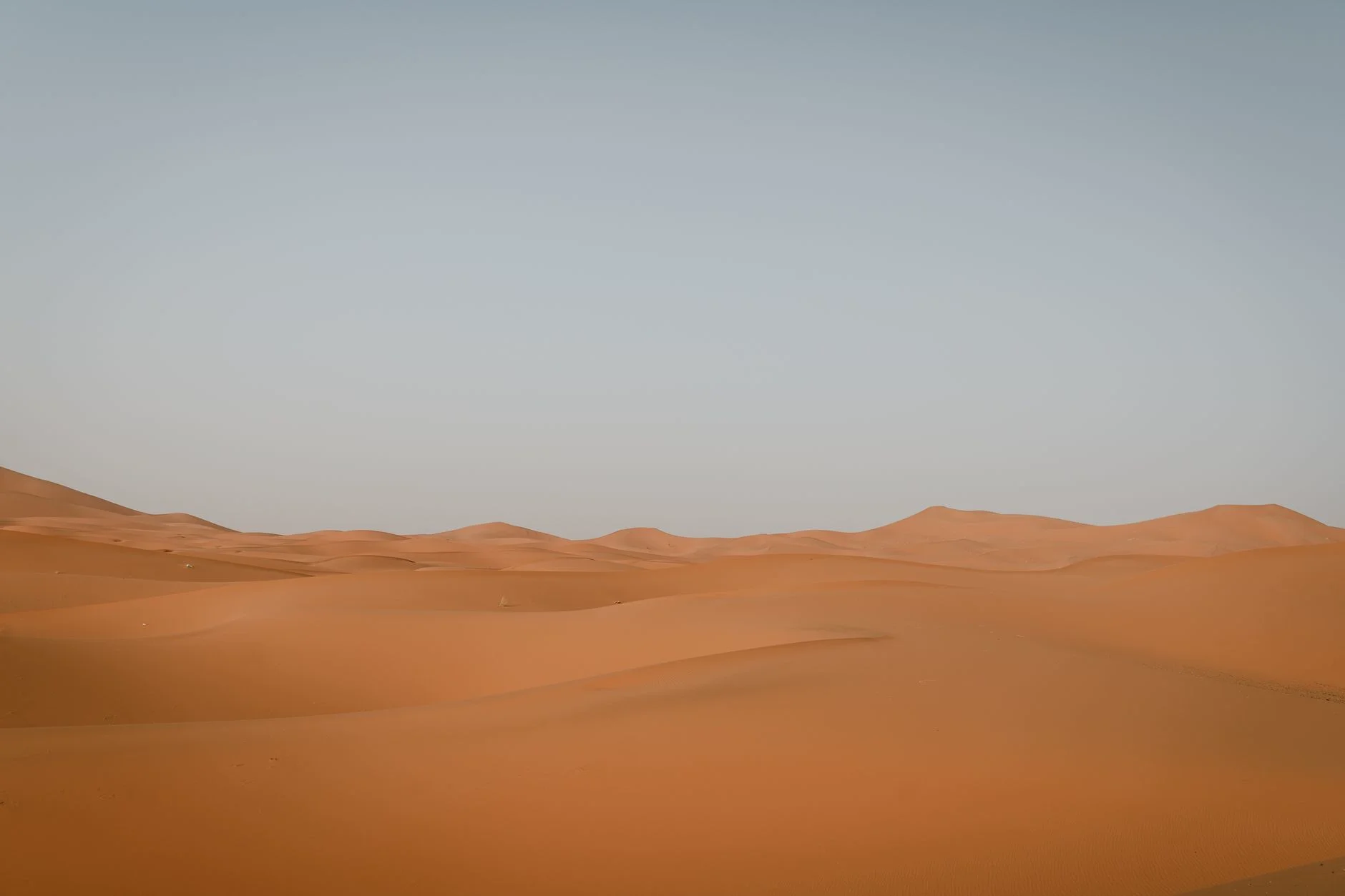
Erg Chebbi near Merzouga is the dune field most photographers head for, and the two windows that matter are sunrise and late afternoon. At those hours the dunes give strong shape and shadow; at midday they are a flat, glaring field with no definition.

One detail is worth planning around: the dunes are blown clean overnight, so footprints from the previous day are gone at first light. That is why sunrise here is the cleanest sand you will get. By mid-morning the surface is tracked.

Desert nights get cold, even after hot days, and the temperature swing between noon and 3am can be 20 degrees or more. Bring a layer for the pre-dawn walk out. The wind also rises in the afternoon and moves sand across the ridges, so wipe your lens and sensor access points before and after each session.

Photogenic sand dunes near Merzouga

Chefchaouen and the Rif

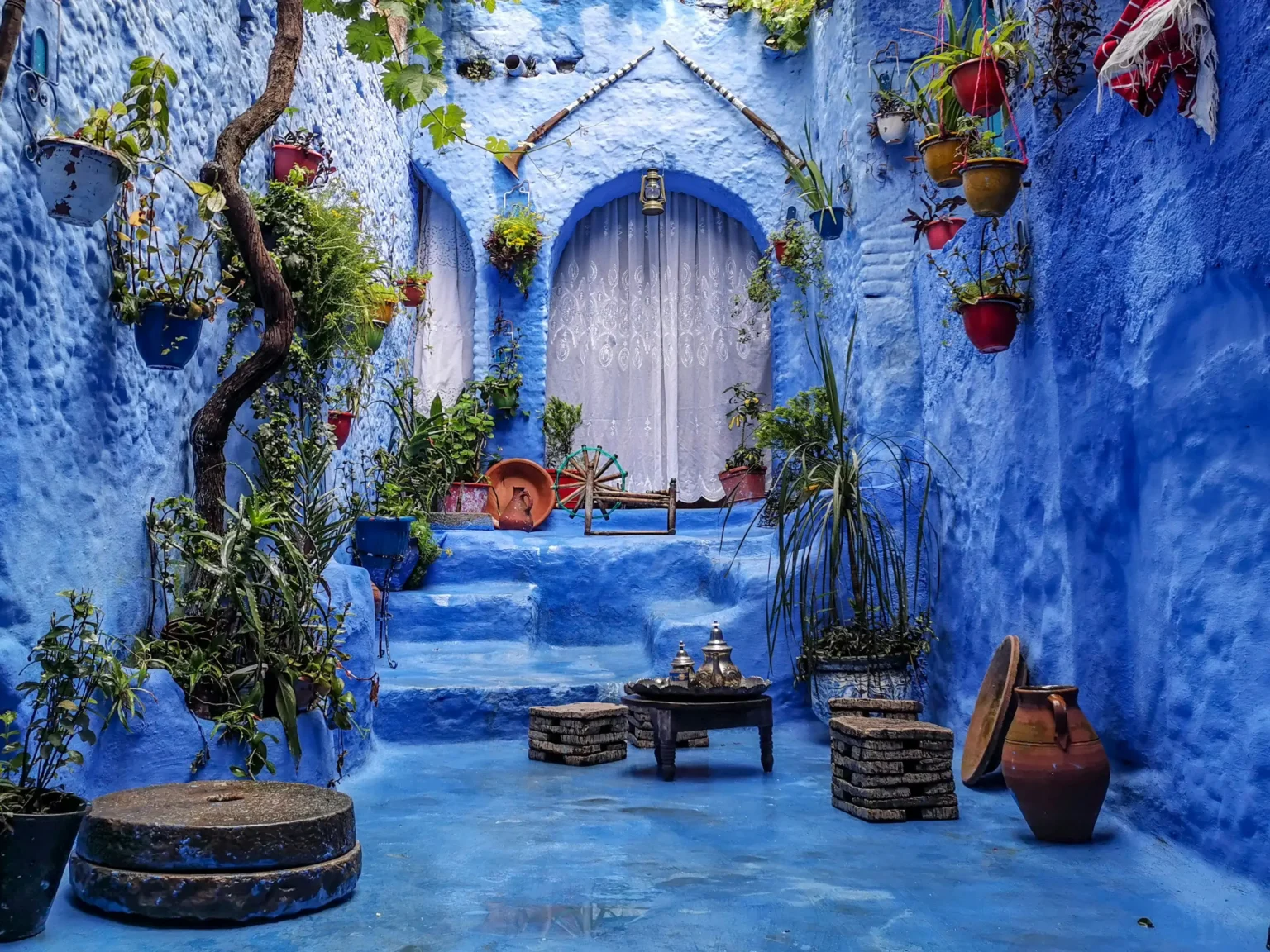
Chefchaouen is the blue-painted town in the Rif mountains, about 120 km from Tangier and roughly four hours by road from Fes. The blue is real and it covers whole lanes, stairways and walls, not only a few corners.

The light is best in the morning. The lanes are quietest early, before the day-trippers arrive from Tangier and Fes, and the sun comes in at an angle across the walls rather than straight down. By late morning the streets fill and the light flattens.

The blue shifts with the light, from near-white in sun to deep and saturated in shade, so the same wall reads differently at 8am and at noon. Meter for the wall in shade and let the sunlit part go bright, or bracket. White balance is easier to fix later than a blown frame.

Blue-painted streets of Chefchaouen

Cities: Marrakech, Fes and Essaouira

Marrakech gives you the medina, the souks, the tanneries seen from terraces, and Jemaa el-Fna at dusk and after dark. The square is at its most photographable in the last hour of light, when the food stalls go up and the smoke starts, and again well after dark under the stall lights.

Fes is the densest of the medinas, and the Chouara tannery is seen from surrounding terraces. The lanes are narrow and genuinely dark, so a fast lens or a higher ISO helps more here than anywhere else on the trip. Push ISO to 3200 if you have to; a sharp frame with noise beats a blurred one.

Essaouira is the Atlantic port, with seafront ramparts and a working fishing harbour. Late afternoon is the best window, when the light rakes across the walls. The wind picks up through the afternoon, which matters for longer exposures; brace against a wall or use a tripod with weight on it.

Gear and practical kit for Morocco

Bring more memory and more batteries than you think you need. Charging points are not always where you expect them, and long days out mean one battery is rarely enough. Two spares per camera is a sensible minimum.

Dust is constant: in the desert it is fine and airborne, in the medina it is thicker and mixed with everything the streets carry. Changing lenses outdoors is how sensors get dirty. Change inside, or carry one body and one zoom and accept the compromise.

  • Polarising filter. The strong light and clear skies are exactly what a polariser handles; it controls glare and deepens the sky. Rotate it per shot rather than leaving it fixed.
  • Spare batteries. Two per body at minimum, charged overnight.
  • Memory cards. Shoot more than you expect; bring double your estimate and back up daily.
  • Lens cloth and blower. For dust on the front element and the sensor.
  • Fast prime. A 35mm or 50mm at f/1.8 or faster earns its place in dark medina lanes and riad interiors.
  • Light tripod. For Jemaa el-Fna at night and Essaouira at dusk; a small one you will actually carry.
  • A local guide. Often the difference between getting access and being refused, especially in Fes and the tanneries.

Ethics and the honest verdict

The rules that matter are simple. Ask before photographing people. Accept a no. Do not fly a drone without a permit. Do not shoot into mosque interiors where you are not welcome. Do not hide the camera behind a long lens to take what you were refused up close.

The honest verdict: Morocco rewards patience and punishes a checklist. If you shoot only at midday you will come home with hard, flat frames of crowded squares. If you get up for sunrise, ask before you shoot, and spend the middle of the day indoors with your kit, the country gives you more in a week than most trips do in a month.

Give it a week if you can, but a well-planned four days in Marrakech and Essaouira, or Fes and Chefchaouen, will produce a stronger set than a rushed loop trying to cover the desert too. The desert deserves its own trip.

Begin your adventure

Your dream Morocco trip starts here

Tell us where you want to go, when, and at what pace, we'll craft a tailor-made itinerary with private transport, hand-picked riads and local guides.