Skip to content
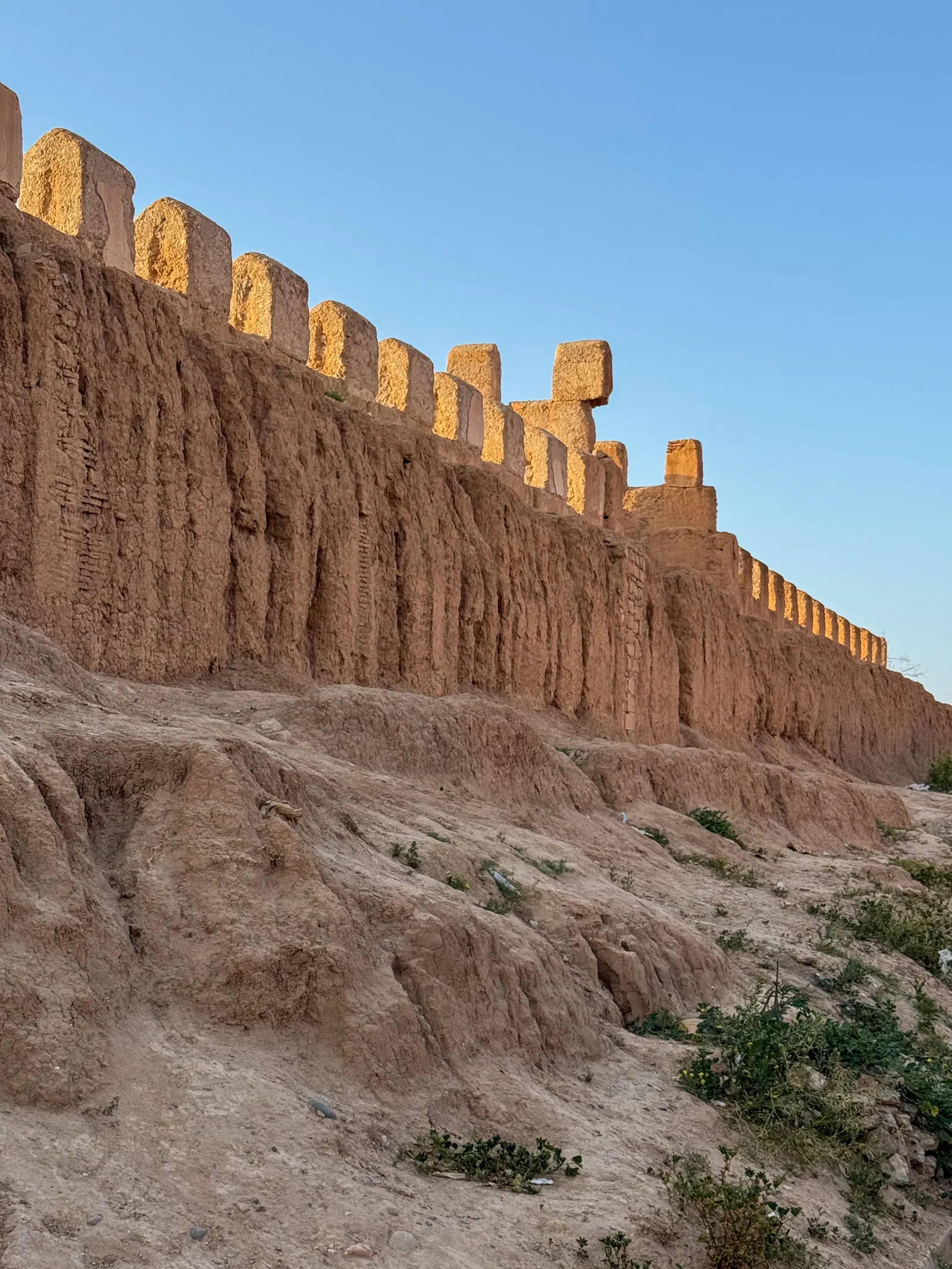
The red rammed-earth walls of Taroudant at sunset
Day Trips

A Taroudant & Tiout Oasis Day Trip from Agadir

Taroudant is the walled town most people only see through a car window on the way to the desert. Paired with the palm oasis at Tiout, 15 km further on, it makes a full day out from Agadir that skips the crowds entirely. Here is the route, the timings, and what to expect when you get there.

Eddyafa Travel
Journal
In this article6 min read

Why Taroudant, and why from Agadir

Taroudant sits about 80 km east of Agadir, roughly an hour to an hour and a half on the N10, depending on traffic leaving the city. It is a genuine walled town, smaller and calmer than Marrakech, and it is usually treated as a fuel stop on the way to Taliouine or the desert. Treated as the destination instead, it fills a comfortable day.

The pairing with Tiout is what makes the day worthwhile. On its own, Taroudant is a couple of hours of walking and a good lunch. Add the palm oasis and the kasbah above it, and you have a full itinerary that mixes two different things: a working market town and an old southern oasis.
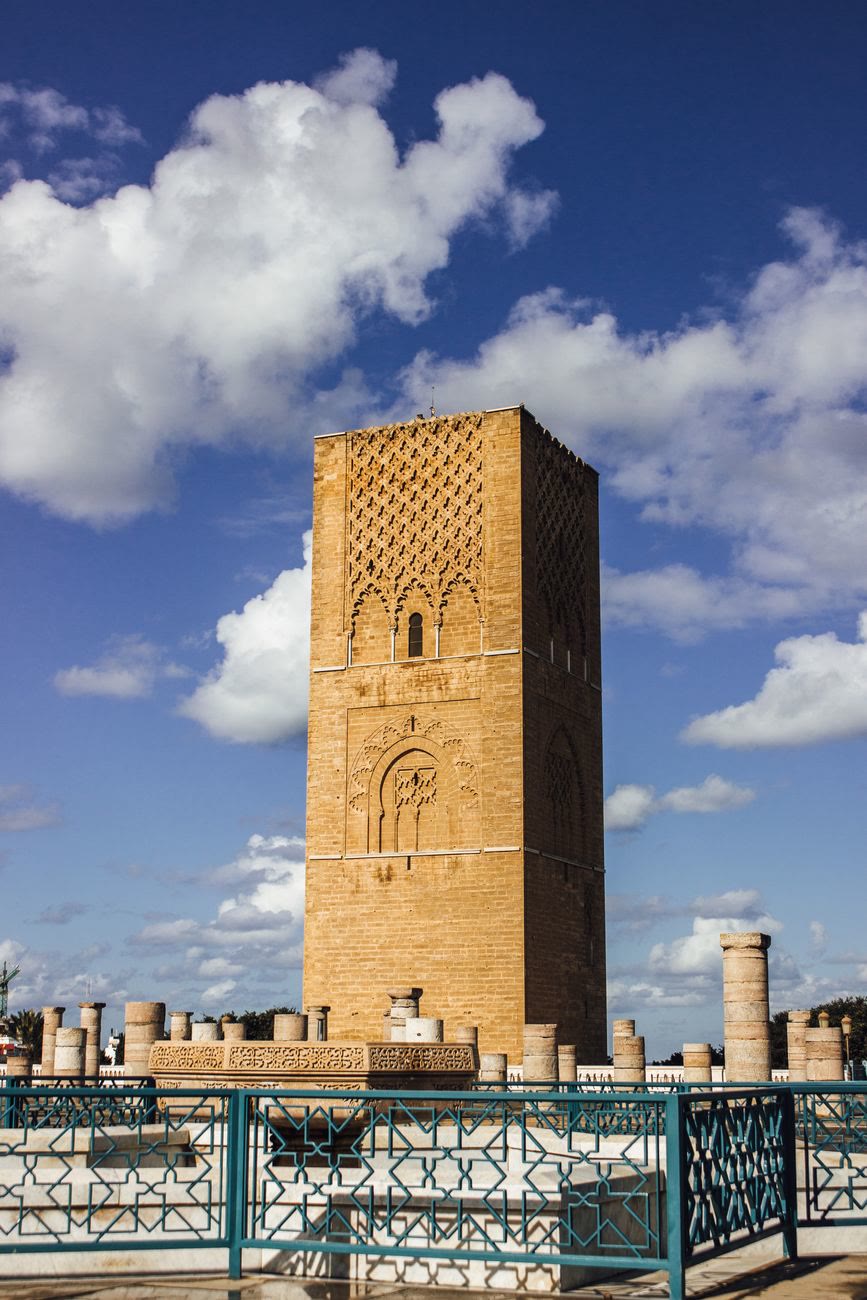
Taroudant medina and its red ramparts

The walls and gates of Taroudant

Taroudant's defining feature is its complete circuit of rammed-earth walls, built in the 16th century under the Saadian dynasty. The circuit runs roughly 7.5 to 8 km depending on how you measure, and it is intact for almost its whole length, with nine gates still in daily use. Some stretches stand 8 to 10 metres high and several metres thick, studded with towers and bastions.

The wall is best seen on foot or from a short calèche ride, and the northern stretch near Bab Kasbah is where the pink-ochre colour is strongest in late afternoon light. You do not need a guide to walk it, and locals use the gates as ordinary streets, so it never feels like a monument behind a rope.

The two souks

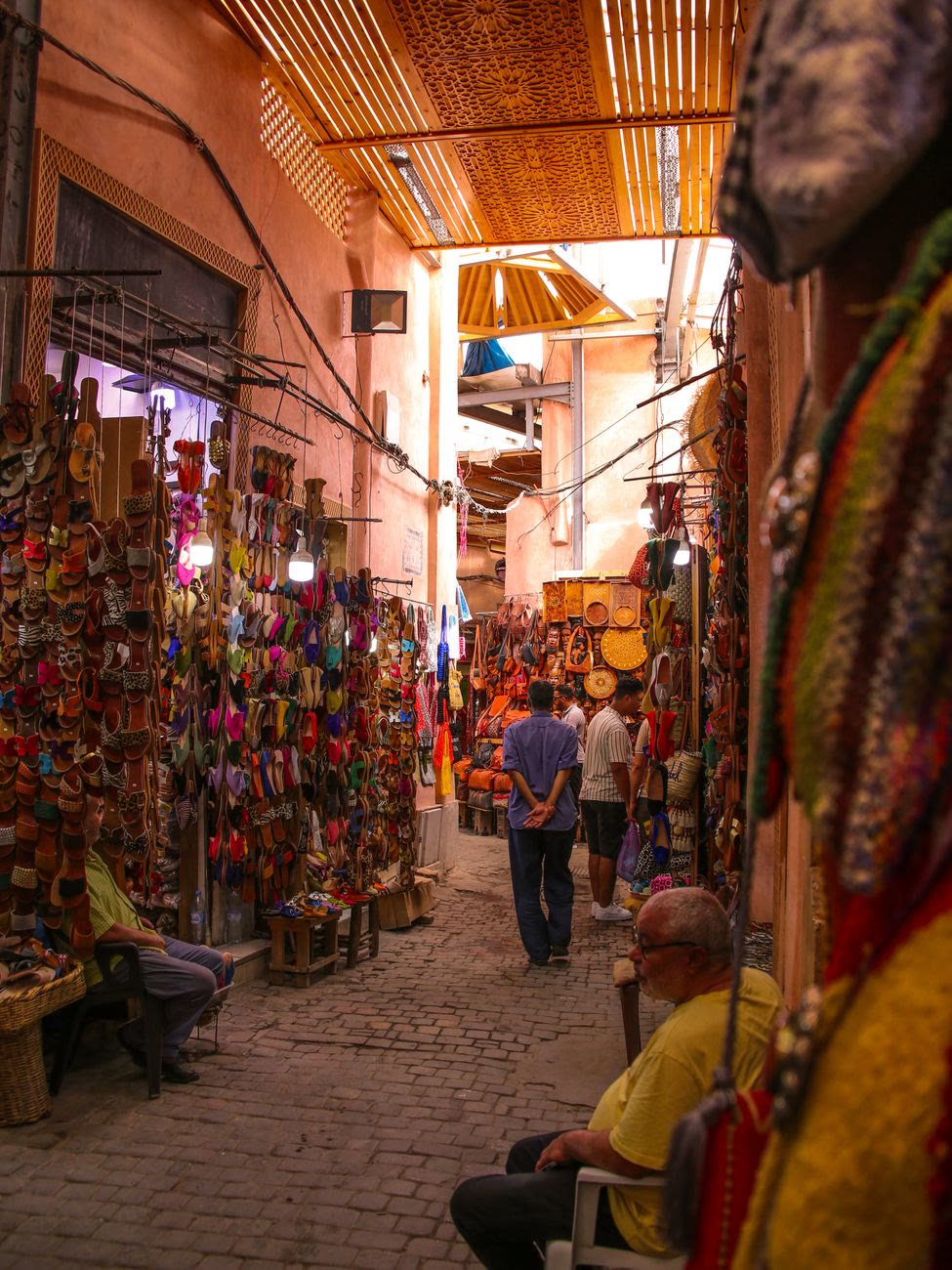
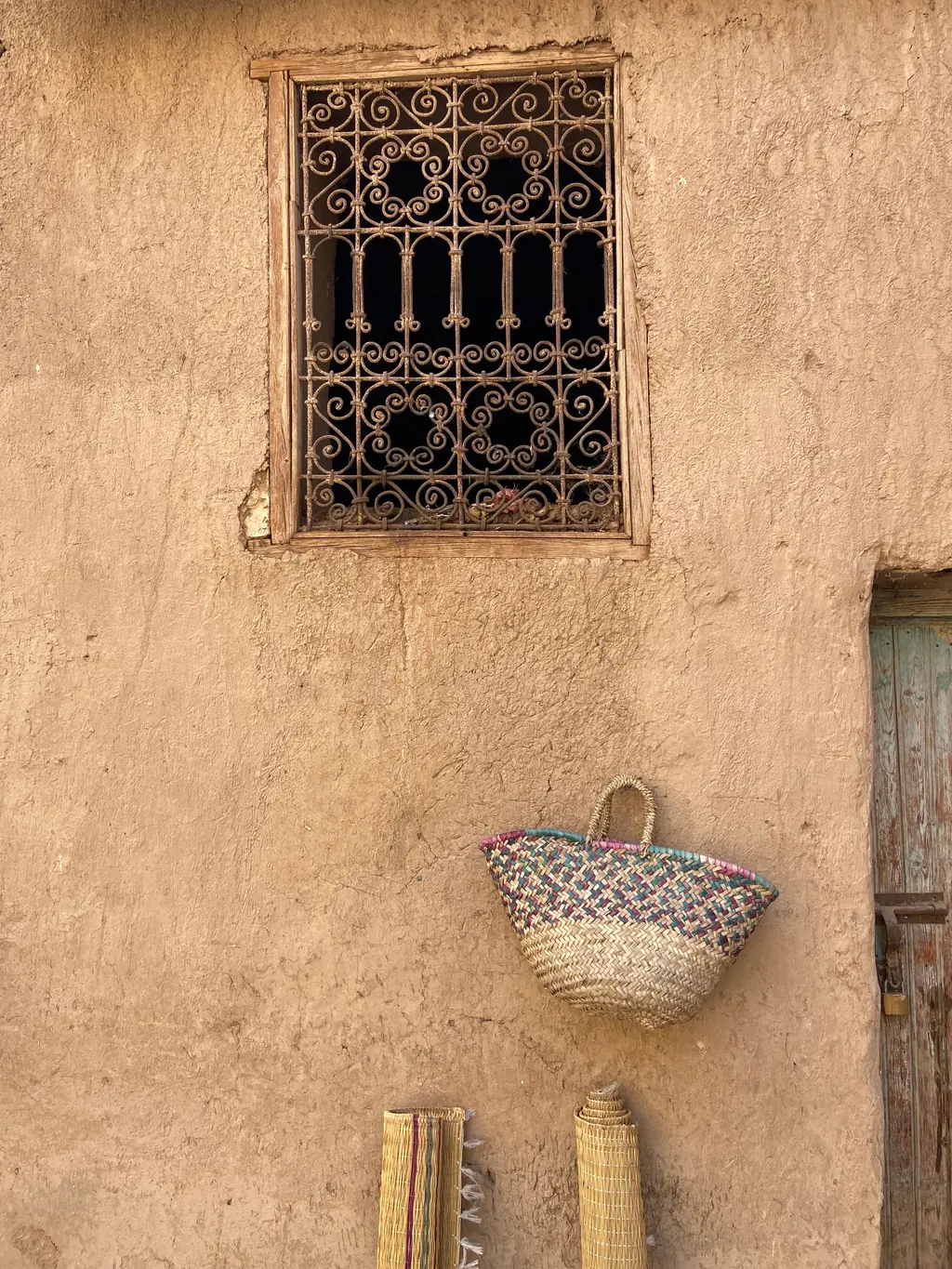
Inside the walls there are two markets worth an hour: the Arab souk and the Amazigh (Berber) souk, both within a short walk of Place Assarag, the central square. The Arab souk leans toward leatherwork, silver, spices and household goods. The Amazigh souk is where craft from the surrounding villages lands — baskets, rugs, and pottery.

This is the useful contrast with Marrakech. Nobody follows you down the lane here, prices open lower, and the bargaining is gentler. If you like the idea of a Moroccan medina but not the pressure, Taroudant is the version to try first.

Mud-brick wall, window and woven baskets in Taroudant

Place Assarag, the ramparts walk and where to eat

Place Assarag is the natural pivot of a visit: cafés on the edge, the gates within sight, the souks a few minutes away. Most of the day is spent between here and the walls, with a detour to the tanneries if you are curious, and to the small artisan shops that sell argan oil and amlou directly.

For lunch, look for the places that fill with local families rather than tour groups. A tagine or a plate of grilled meat with bread and salad is the standard, and it costs a fraction of an Agadir resort meal. Vegetarians are fine with salads, bissara and vegetable tagines, though you should say no meat clearly since stocks are shared.

Tiout: the oasis and the kasbah above it

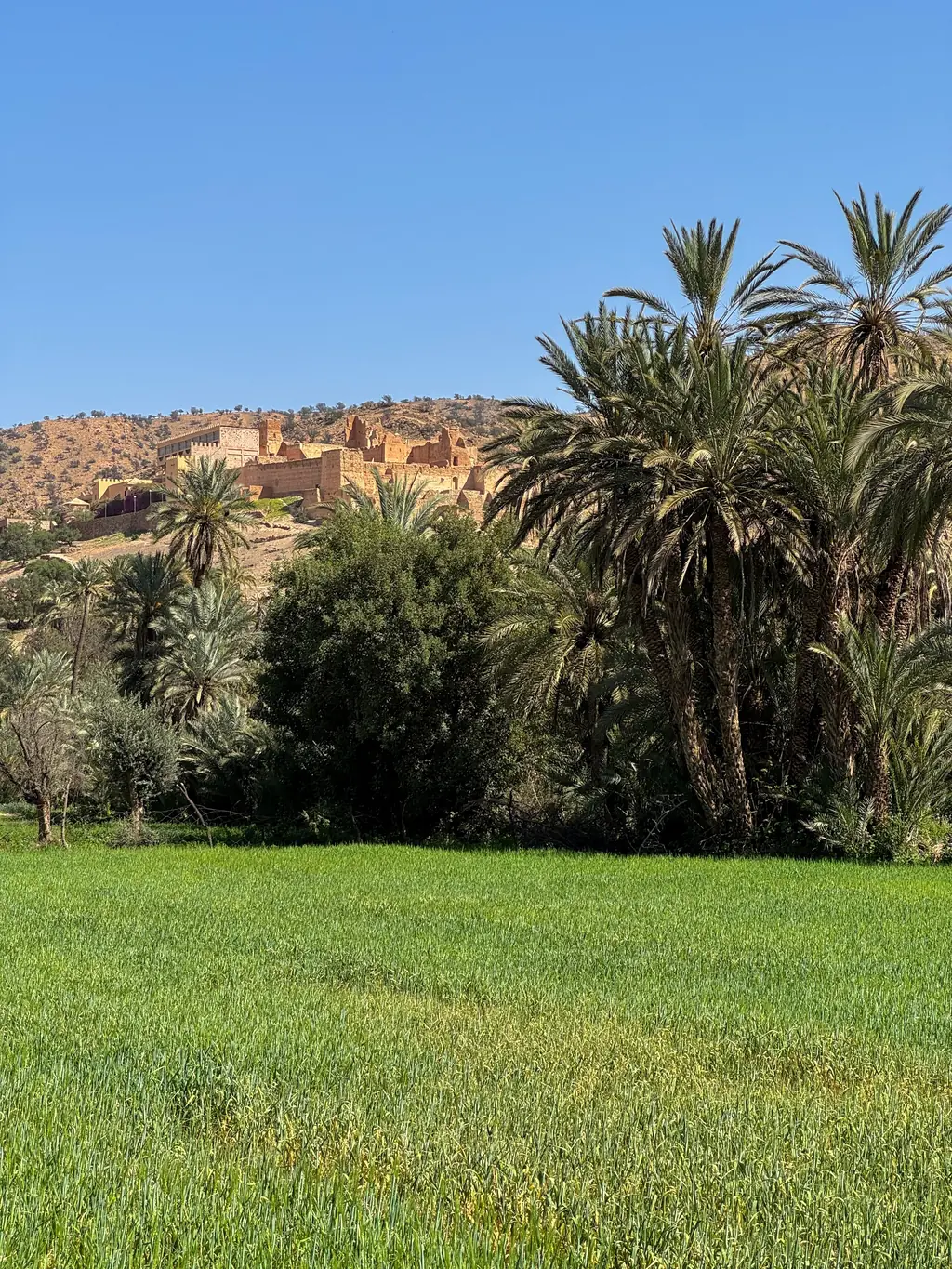
Tiout is a small village about 15 km south-east of Taroudant, at the edge of the Souss plain where it meets the Anti-Atlas foothills. Its reason for existing, and for yours, is the palm oasis: a dense belt of date palms fed by springs, with irrigation channels running through it and small plots of vegetables between the trunks.

Above the village, a short, steep walk leads to the ruins of a kasbah. The view from the top takes in the whole oasis, the flat plain behind and the mountains ahead. It is not a restored attraction; it is an old, crumbling watch point, and that is part of the appeal. The palm groves themselves are best explored slowly on foot, with the understanding that these are working gardens rather than a park.

Tiout practicalities

There is no entrance fee for the oasis. You will be offered a walk with a local guide, sometimes also a donkey ride for children, and it is reasonable to accept a short guided walk if you want the stories and the route through the channels, or to decline politely if you prefer to wander alone. Agree the price before you set off.

Facilities are limited: a couple of simple cafés near the palm grove, basic toilets, and little else. Bring water, wear shoes you do not mind getting dusty, and go in the morning or late afternoon rather than the middle of the day in summer, when the palm grove offers shade but the walk up to the kasbah does not.

Palm oasis and fortified village at Tiout

How to structure the day

A workable shape from Agadir: leave by 8:00, reach Taroudant around 9:30, walk the walls and both souks, have lunch on Place Assarag. Then drive on to Tiout, spend an hour and a half in the oasis and up at the kasbah, and be back in Agadir by early evening. That is a full but not rushed day.

If you are self-driving, the N10 is a good sealed road and the turn to Tiout is signposted and short. If you would rather not drive, this is a standard private day trip, and the advantage of a driver is that you get the local context on the way and do not lose time finding parking in Taroudant.

What this day trip is not

This is not a substitute for the Sahara or the High Atlas. There is no desert camp, no dramatic gorge, no camel trek of any length. What it is: an easy, uncrowded day that shows you a real southern market town and an old oasis, with about three hours of driving in total.

It also suits a specific traveller well — someone based in Agadir for a beach holiday who wants one day inland without committing to an overnight. For that person, Taroudant and Tiout are a better fit than a long haul to Marrakech, and considerably cheaper.

Best time to go

October to April is the comfortable window, with mild days and no real heat. Spring brings the almond and citrus blossom around the Souss, which softens the drive. Summer is workable if you start early and finish by lunch, but the plain bakes and the walk up to the kasbah is exposed.

Ramadan changes the rhythm of the town more than usual here: souks run shorter days, many cafés close until sunset, and lunch on Place Assarag becomes harder to find. The oasis is unaffected, but plan around it if you want the full market experience.

The honest verdict

Taroudant and Tiout will not appear on a list of Morocco's must-see sights, and they should not. They are the kind of day that earns its place on a longer trip by being real, unhurried and close, and by showing you the south of the country without a ticket booth in front of it.

If you have a spare day in Agadir and want to see something other than the beach and the promenade, this is one of the most straightforward good decisions available. Go early, eat where the locals eat, and save the palm oasis for the cooler part of the day.

Begin your adventure

Your dream Morocco trip starts here

Tell us where you want to go, when, and at what pace, we'll craft a tailor-made itinerary with private transport, hand-picked riads and local guides.