Skip to content
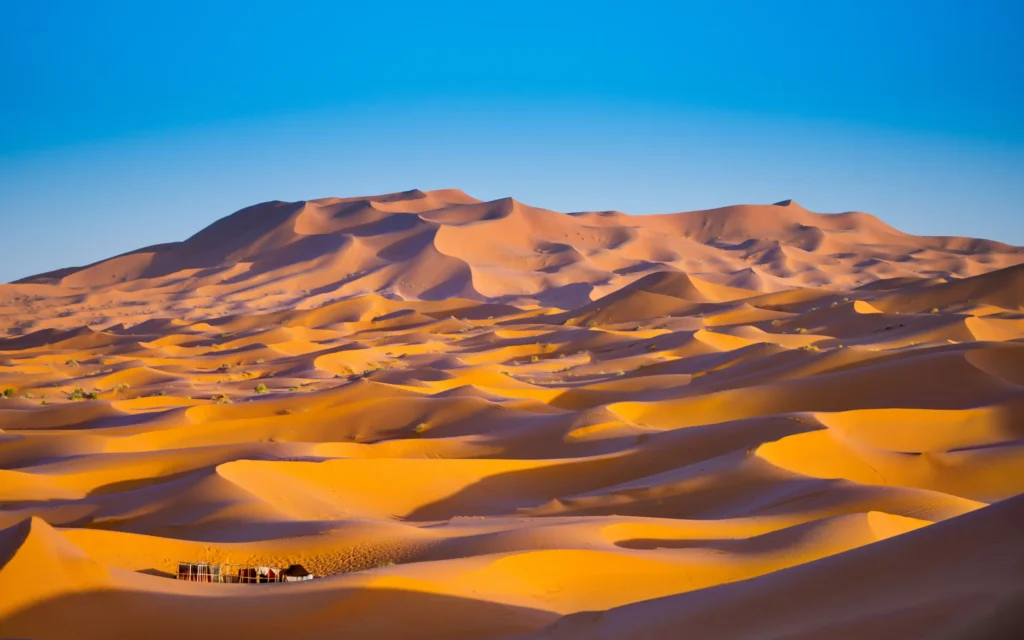
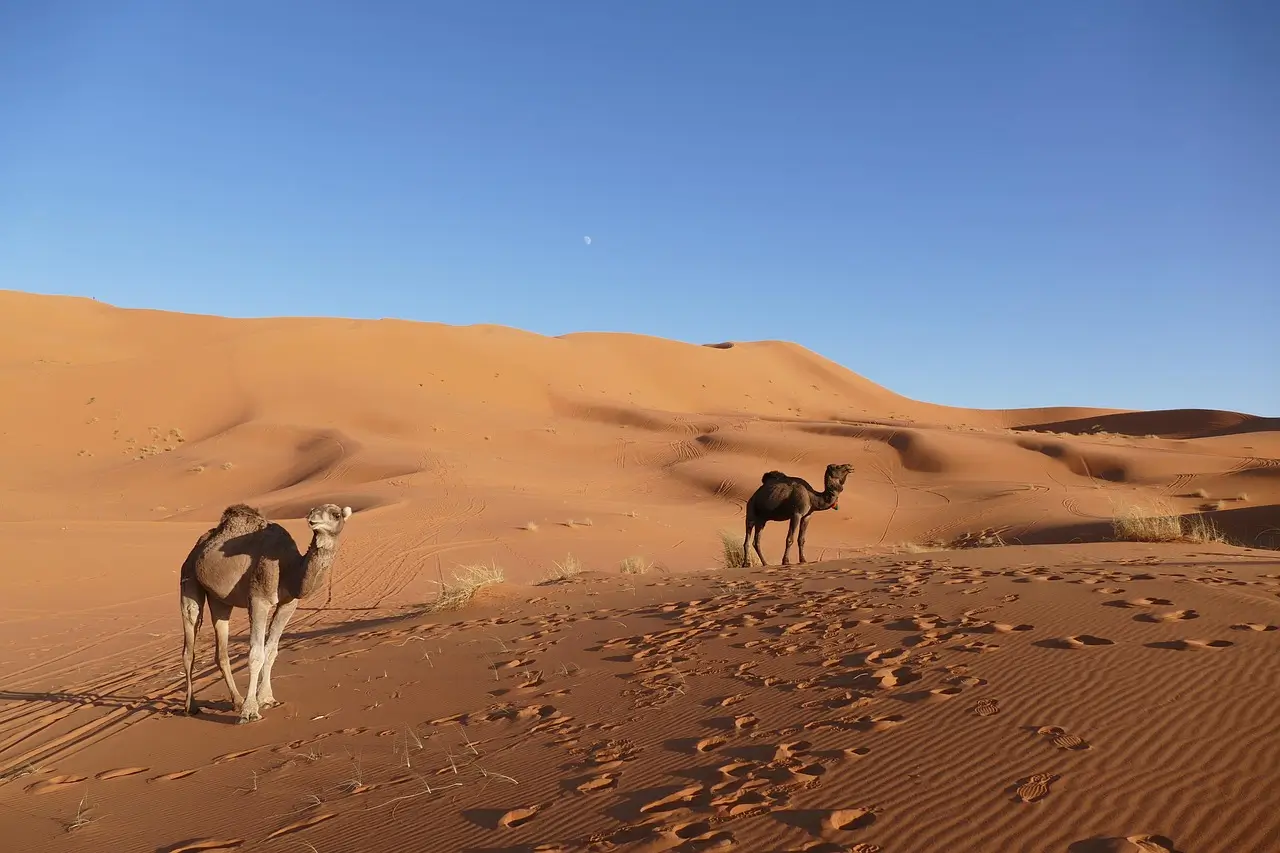
The Merzouga dunes under a clear winter sky
Winter Travel

Morocco in Winter: Weather, Packing & Routes (Dec–Feb)

Morocco in winter isn't one season, it's several. You can dip in the Atlantic at Agadir, eat lunch in a T-shirt in Marrakech, watch snow fall on the Middle Atlas cedars and shiver under the dunes at Merzouga, sometimes on the same day. Here's how to pick your route before you pick your dates.

Eddyafa Travel
Journal
In this article7 min read

What winter in Morocco actually feels like

Morocco in winter is not one climate, it is five. On the same January day you can dip in the Atlantic at Agadir, eat lunch in a T-shirt in Marrakech, watch snow fall on the Middle Atlas cedars and shiver through a night near freezing under the dunes at Merzouga. The trick is to stop thinking of winter in Morocco as a single forecast and start treating it as a route you choose.

The short version: the south and the coast stay mild and bright, the inland cities are pleasant by day and cold after dark, and the mountains and the far north do a genuine winter. Plan around that, and December to February becomes one of the most rewarding stretches of the year to be here.
The Atlantic coast: Agadir and Essaouira

Agadir is the winter sun of Morocco. December and January days usually sit around 20–22°C (68–72°F) with long hours of sunshine, nights dip to roughly 10–13°C (50–56°F), and rain is rare; a couple of wet days a month at most. That is picnic weather rather than beach-poster weather, but after a European January it feels like a gift.

Essaouira, a little further north, is cooler and windier; the trade wind that makes it a kitesurfing town in summer never really stops, so bring a windproof layer. What you get in return is that famous white-and-blue light, empty ramparts at sunset, and a port where the fishing boats still come in every afternoon. Both towns suit the second half of a winter trip better than the first: warm, slow and easy to leave.

Marrakech: sunny days, cold nights

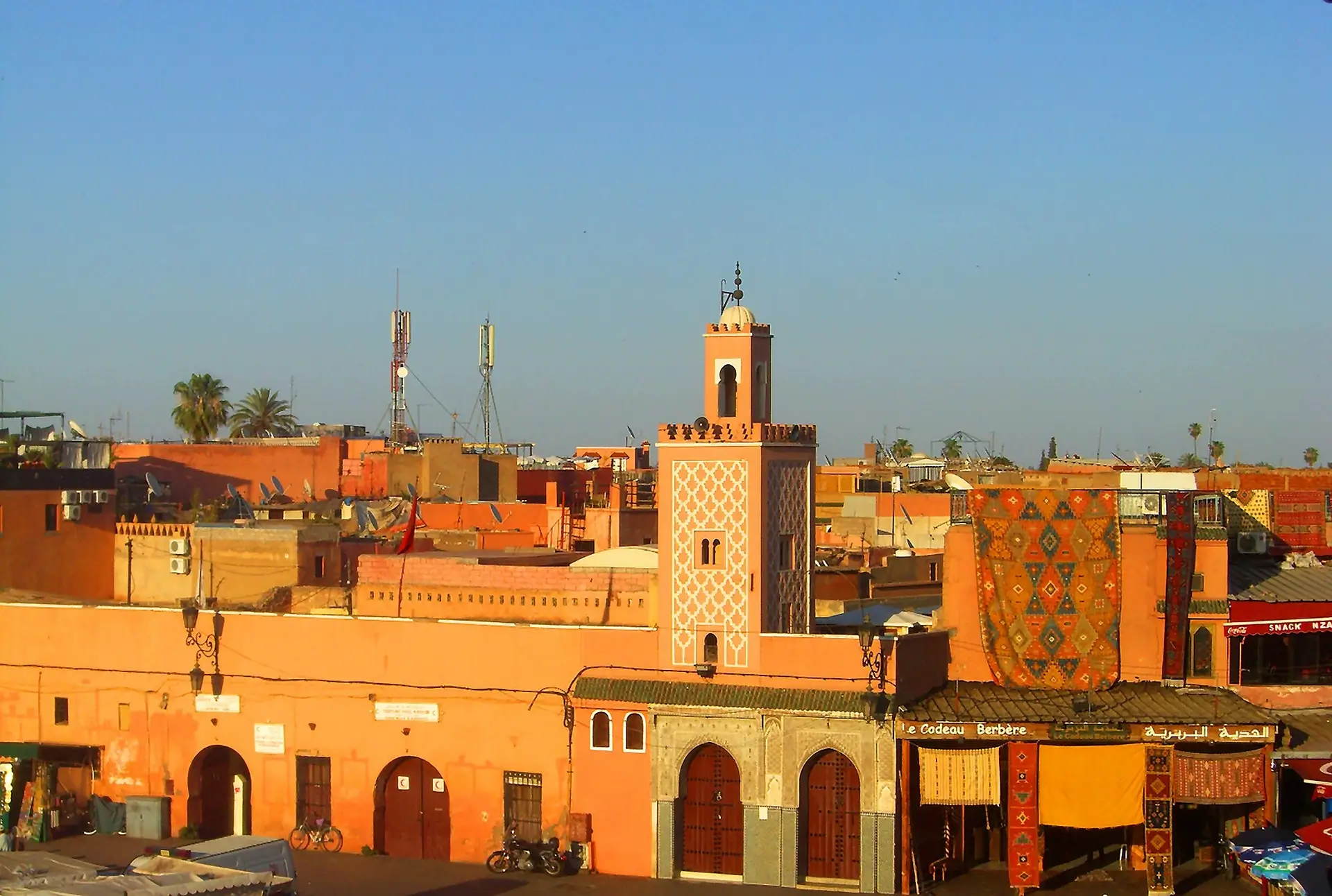
Marrakech in winter is the split-personality city. Days are lovely, expect around 18–20°C (65–68°F), deep blue skies and enough sun to eat outside in a courtyard. Then the sun drops behind the Atlas at about six in the evening and the temperature falls with it, often to around 5–7°C (41–45°F) by late evening. Locals dress for the evening, not for the afternoon.

So the winter rhythm is: layers off by midday, layers back on for dinner, and a mint tea on a rooftop at sunset, when sitting there in a T-shirt would be madness. Riads are built for this, thick walls, courtyard, blankets on the roof terrace, which is one more reason to stay in one rather than a hotel.

The Sahara at Merzouga: mild days, freezing nights

The desert is the surprise of a Moroccan winter. Daytime at Erg Chebbi is genuinely comfortable, often around 18–22°C (64–72°F), the range that makes camel treks and dune walks a pleasure rather than an endurance test. Then night falls fast and hard. Clear desert skies radiate heat away, and Merzouga nights commonly drop to around 2–6°C (35–43°F), with colder snaps below that.

This is the one place where the word winter means business after dark. A well-run camp provides thick blankets, sometimes hot water bottles and heated tents; a cheap camp may not. When you book, ask directly what bedding and heating you get, and pack a warm hat, socks and a proper jacket for the hour between dinner and the campfire. Dress for a cold night and the desert in winter is unforgettable.

A desert camp in the Sahara

Ifrane and the Middle Atlas: yes, Morocco gets snow

Ifrane sits at about 1,665 metres in the Middle Atlas and is nicknamed Little Switzerland for good reason, red-roofed chalets, cedar forests and real snow. Snow typically falls from December through March, with the most reliable cover in January and February, though the amount swings a lot from one winter to the next. In a good year the town and the slopes around Michlifen are white; in a lean year you get cold and bare.

Practical note: the access roads, especially around Azrou and Ifrane, can ice over, and the authorities sometimes require snow chains or turn cars back. If snow is the point of your trip, check conditions the evening before and carry chains. If it is not, treat Ifrane as a cold, scenic detour from Fes or Meknes rather than a guaranteed snow day.

Chefchaouen and the Rif: cold, green and wet

The north is where Moroccan winter is least photogenic and most real. Chefchaouen, the blue city, gets cool, damp weather from roughly November to March: daytime may reach only 10–14°C (50–57°F), and rain is common, especially between December and February. The Rif mountains above the town can be cold and misty, occasionally snowy on the higher ridges.

That said, a wet Chefchaouen is atmospheric in its own way, the blue walls deepen in the rain and the town empties of day-trippers. Bring a real coat and waterproof shoes, not a fashion jacket, and you will enjoy the quiet version of the city that most summer visitors never see.

Why winter is a smart time to go

Three things make December to February genuinely underrated. First, the light: winter skies are crisp and clear, the low sun throws long shadows across the medinas and dunes, and photographers get the sharp definition that hazy summer light never delivers. Second, the crowds: apart from the holidays this is low season, so you can walk into a riad, eat at the good restaurant and see Jemaa el-Fnaa without standing in line.

Third, the prices: outside Christmas and New Year, accommodation and tours are at their cheapest of the year, and a budget that buys a standard room in spring often buys an upgrade in winter. Add comfortable desert daytime temperatures and it is easy to argue that the smart traveller goes south in January while everyone else waits for spring.

What to pack for Morocco in winter

  • Layers above all. A winter day can swing 15°C between afternoon and night, so a light base layer, a mid-layer and something warm to add after sunset matter more than any single heavy item.
  • A real coat for the north and the mountains. Chefchaouen, Ifrane and the Rif are cold and damp, pack a waterproof jacket and closed, grippy shoes.
  • Serious warm gear for the desert night. A hat, gloves, thick socks and a warm jacket for Merzouga, even though the day is mild. The cold there arrives all at once.
  • Sun protection anyway. Winter sun at altitude and on the coast still burns; sunscreen and sunglasses earn their place.
  • Comfortable walking shoes and a scarf. Cobblestones, medinas, and a scarf that doubles as a wind-breaker and a respectful cover for mosques.

The Christmas and New Year caveat

One stretch of winter breaks every rule above: the last week of December. Christmas itself is not a public holiday in Morocco, shops, markets and sights stay open, but Morocco has become a popular place to spend the holidays, and from around 27 December to 2 January demand spikes. Desert camps around Merzouga run festive dinners and sell out, riads in Marrakech fill, and prices rise with them.

If your dates land in that window, book the camp and the riads three to four months ahead, ideally by October or early November, and expect higher prices and a livelier atmosphere than the rest of the season. If you can shift even a week earlier or later, you get the same winter weather with far more space and choice.

Driving in winter, and the route I would take

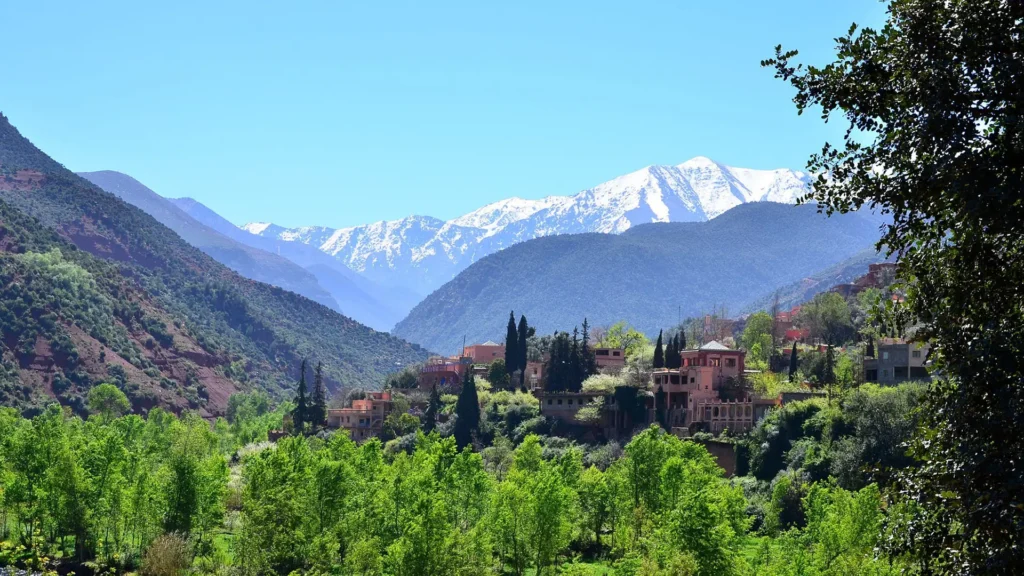
Winter is the season to respect the High Atlas. The Marrakech–Ouarzazate road climbs over the Tizi n'Tichka pass at around 2,260 metres, and between November and March it is regularly closed by snow, sometimes for hours, with snow barriers on both approaches. Temperatures at the summit can sit 15–20°C below Marrakech, and the gendarmerie will turn you back if the pass is shut or if you lack chains in a snow event. Check the road status the morning you drive, leave early, and build in a spare day rather than gambling on a tight connection.

The reliable winter route leans south and low. Start in Marrakech, take the easier Ouarzazate corridor when the pass is open, or cross the Tizi n'Tichka only on a clear, checked day, then continue to the Dades Valley and on to Merzouga for the desert. Finish on the coast, back through Ouarzazate and over the mountains to Agadir, where the sun and the ocean wait. That shape keeps the cold nights down to a couple of camps, avoids the wet north, and ends the trip warm, which is exactly how a winter itinerary should end.

The High Atlas in winter

Begin your adventure

Your dream Morocco trip starts here

Tell us where you want to go, when, and at what pace, we'll craft a tailor-made itinerary with private transport, hand-picked riads and local guides.