Skip to content
Scenic Moroccan landscape on a ten-day itinerary
Itineraries

10-Day Morocco Itinerary: The Classic Route With the North Added

Seven days covers the south. Ten days lets the route breathe and adds what the short version has to cut: the cedar forests of the Middle Atlas, Chefchaouen's blue medina and a finish through Rabat. Day by day, with real driving times.

Eddyafa Travel
Journal
In this article7 min read

How this route differs from the 7-day version

A week in Morocco is a sprint: Marrakech, the Atlas, the dunes and Fez with almost no slack. Ten days changes the shape of the trip rather than just adding three hotels. The southern spine stays — Tizi n'Tichka, Aït Ben Haddou, the gorges, Erg Chebbi — but the return leg splits across two nights instead of one long drive, and the route continues north to the places the short version has to skip.

This plan assumes you fly into Marrakech and out of Casablanca, which is how most international flights work and saves a 600 km backtrack. If your tickets force a loop, days 9 and 10 simply reverse. Driving averages about four hours a day — unhurried by Moroccan standards, and every drive day has a reason to stop along the way.
  1. Days 1–2: Marrakech at walking pace

    Give the city two full days before any road starts. Day one belongs to the medina: Jemaa el-Fna at dusk, the souks, Bahia Palace in the morning light. Day two is for Majorelle Garden, a rooftop over the Koutoubia and the first tagine of the trip. Arriving jet-lagged is an advantage here — the square is best when you are awake at seven in the evening and useless at two in the afternoon.

    Sleep inside the medina in a riad, accept that taxis stop at the gate and your bags are carried the last few hundred metres. Book nothing for the middle of either day. This is also where you confirm the desert camp, buy a SIM card and draw enough cash for the road.

  2. Day 3: Tizi n'Tichka, Aït Ben Haddou and Ouarzazate

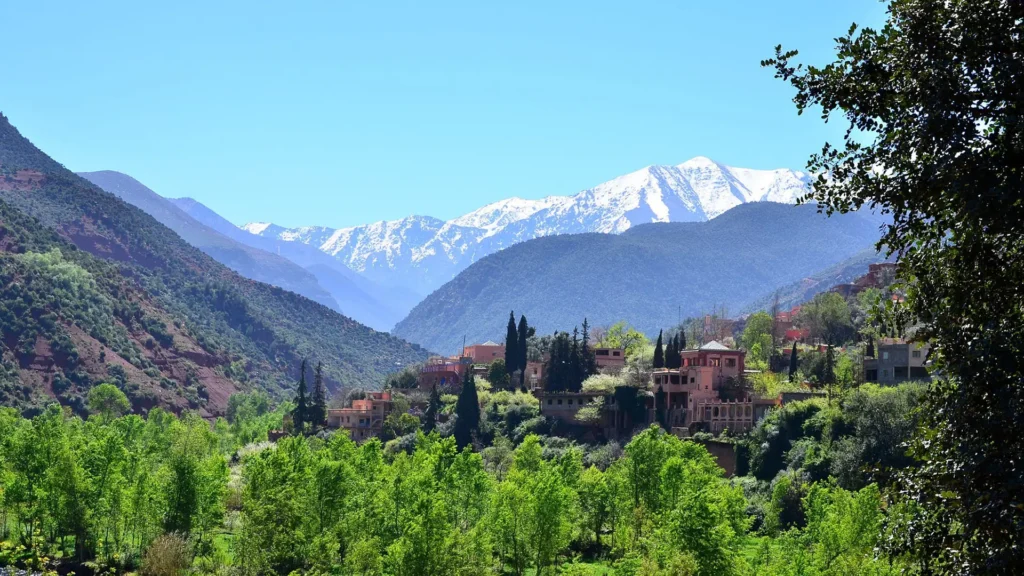
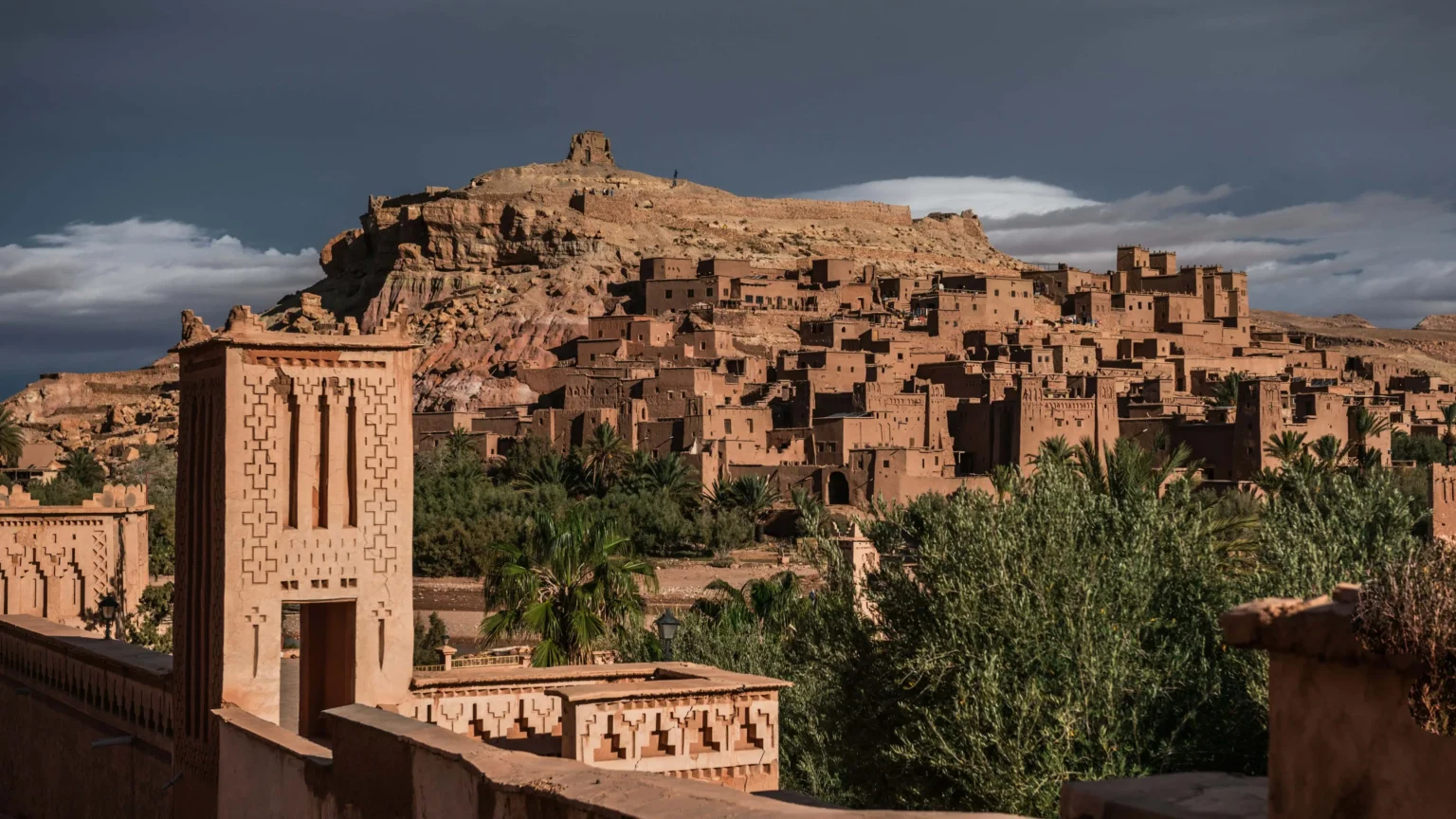
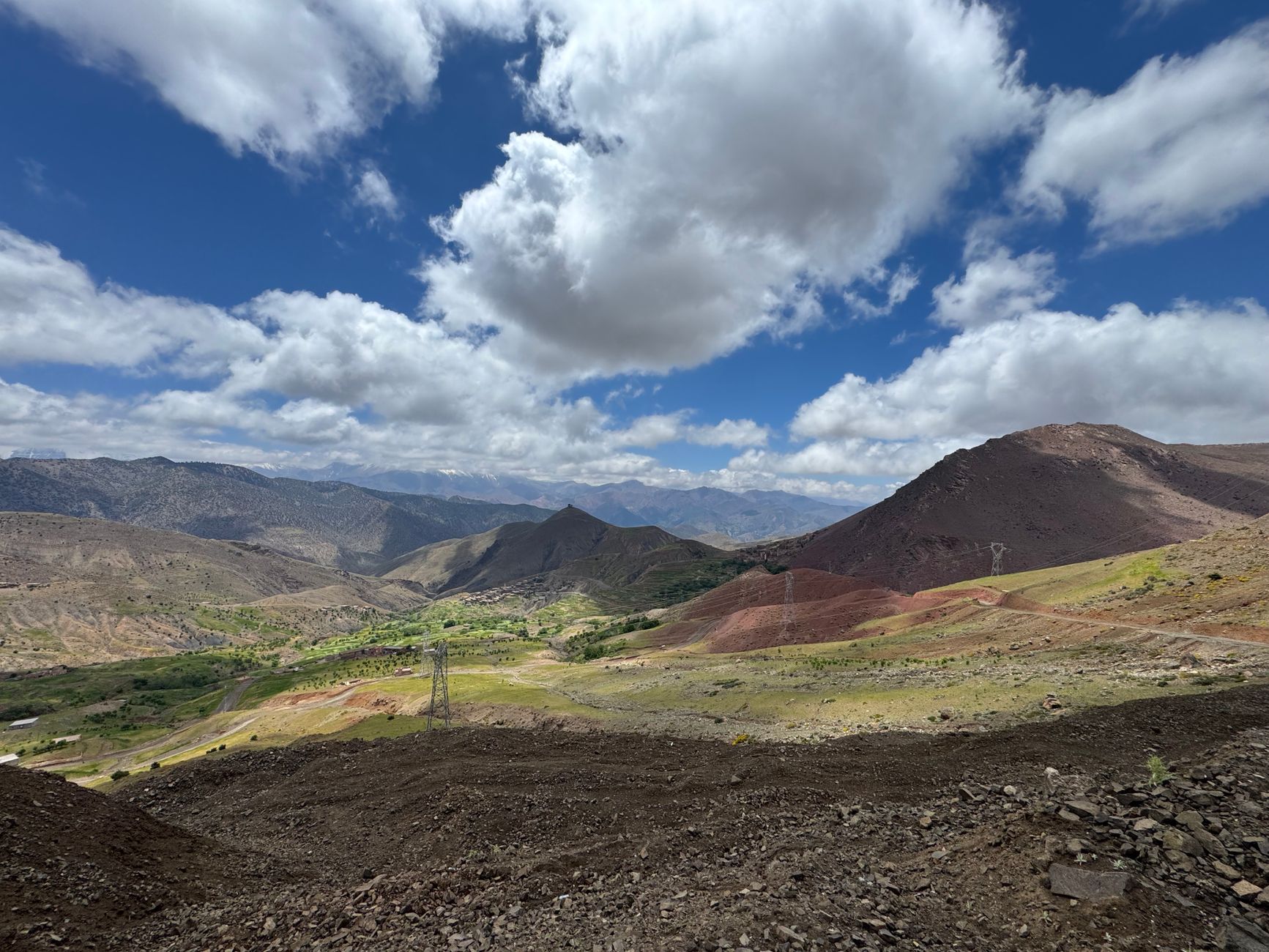
    Leave at eight. The Tizi n'Tichka pass climbs to just over 2,200 metres in about two hours, and the landscape turns from walnut orchards to bare rock without warning. Below the pass sits Aït Ben Haddou, the fortified ksar that has stood in for half of Hollywood's ancient cities — walk inside the walls, climb to the granary and give it ninety minutes rather than twenty photos from the road.

    The afternoon is a short run to Ouarzazate, the film-studio town, which makes a sensible first night: about 180 km in total, four hours with stops. If you visit a studio or the Kasbah Taourirt, keep it light — the point of the day is that you have left the plains behind.

  3. Day 4: The Dades and Todra gorges

    Follow the Valley of the Roses east: pottery workshops, rose-water distilleries in season, and the road folding into the Dades gorge in switchbacks worth stopping for. Three hours of driving with the windows down. The canyon walls do the colour work; you just have to keep the car between them.

    From there it is under an hour to Todra, where the road narrows to twenty metres between 300-metre limestone walls. The canyon is at its best in the last two hours of light. Stay in or near Tinghir — next morning's run to the desert is the longest leg of the trip, and sleeping close to it buys you an unhurried start.

    Serpentine road cutting through the Dades Gorge
  4. Day 5: Erg Chebbi — sleep on the dunes

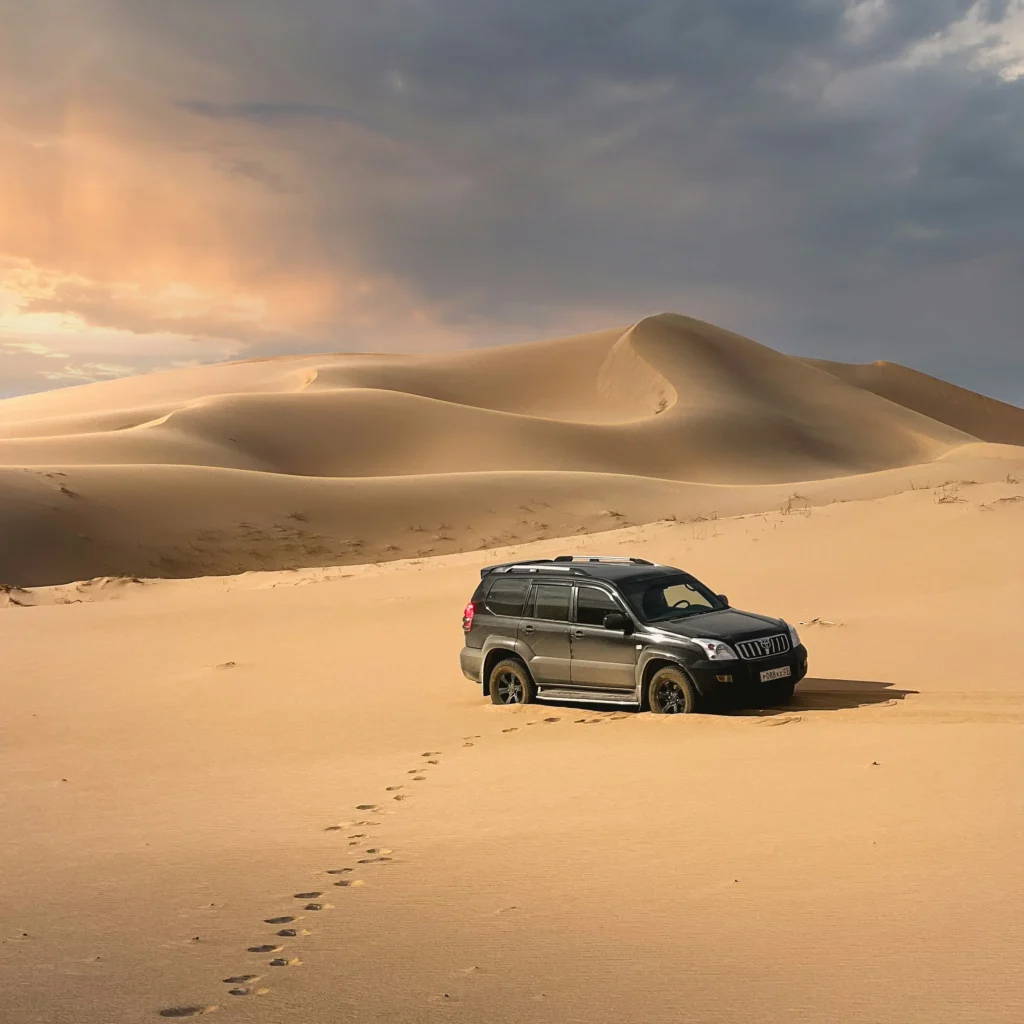
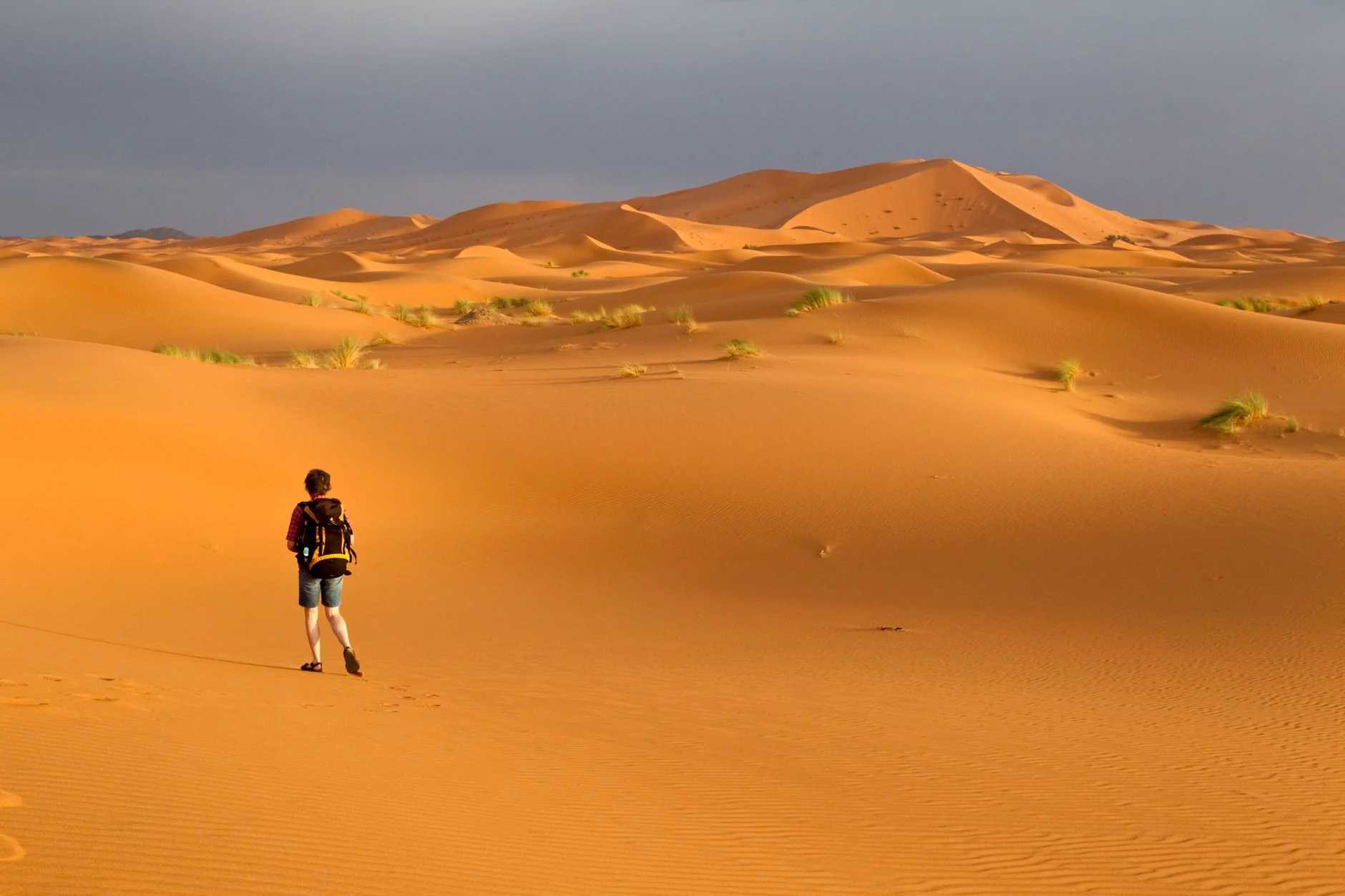
    About 270 km, four to five hours via Erfoud, and the horizon changes completely: Erg Chebbi's dunes rise to 150 metres out of a stony plain. Leave the car in Merzouga or Hassi Labied, then take a camel or a 4x4 the last stretch to a camp inside the dunes.

    Book the camp directly or through your riad and ask three questions before paying: how far inside the dunes it sits, whether the tents have private bathrooms, and what dinner includes. Sunset from the first high ridge and the sky an hour later — no light pollution, full Milky Way — are the two hours people plan a whole year around.

    Sand dunes of Merzouga at sunrise
  5. Day 6: The Ziz valley to Midelt

    Back on the road by nine, the route follows the Ziz river north through Erfoud and Errachidia, where the oasis widens into palm groves that run for kilometres. The gorges above Timhdillite make the natural lunch stop. This is the leg the seven-day version compresses into one exhausting push to Fez; splitting it is most of the reason ten days feels different.

    End in Midelt, an apple town at 1,400 metres that Moroccans use as their summer escape. It is unglamorous and exactly what you need: a quiet hotel, a cool evening and only two and a half hours of driving tomorrow. About 270 km today, four to five hours.

  6. Day 7: Middle Atlas to Fez

    The morning runs through cedar forest between Azrou and Ifrane — stop at the cedar park where Barbary macaques wait at the roadside, and again in Ifrane, the alpine-looking town the French built at 1,700 metres. Then the road tips downhill and the traffic thickens for the last hour into Fez.

    Arrive by early afternoon and do nothing ambitious. Check into the riad in Fez el-Bali, walk one lap of the Bab Boujloud gate and the tannery viewpoints while there is still light, and let tomorrow be the full day this medina deserves. Roughly 200 km, three and a half hours.

  7. Day 8: Fez, all day

    Fez el-Bali is the largest car-free urban area in the world, and it defeats anyone who tries to navigate it from a map. Hire a licensed guide for the first three hours — the madrasas, the Chouara tannery, the Qarawiyyin courtyards — then lose the guide on purpose and spend the afternoon buying nothing in particular.

    The evening belongs to a roof terrace and a pastilla. If one day feels short, it is: Fez rewards two, and trading it against Chefchaouen is the only real trade-off in this itinerary. Nothing here is reserved, so the decision can be made on the ground.

  8. Day 9: Chefchaouen, the blue city

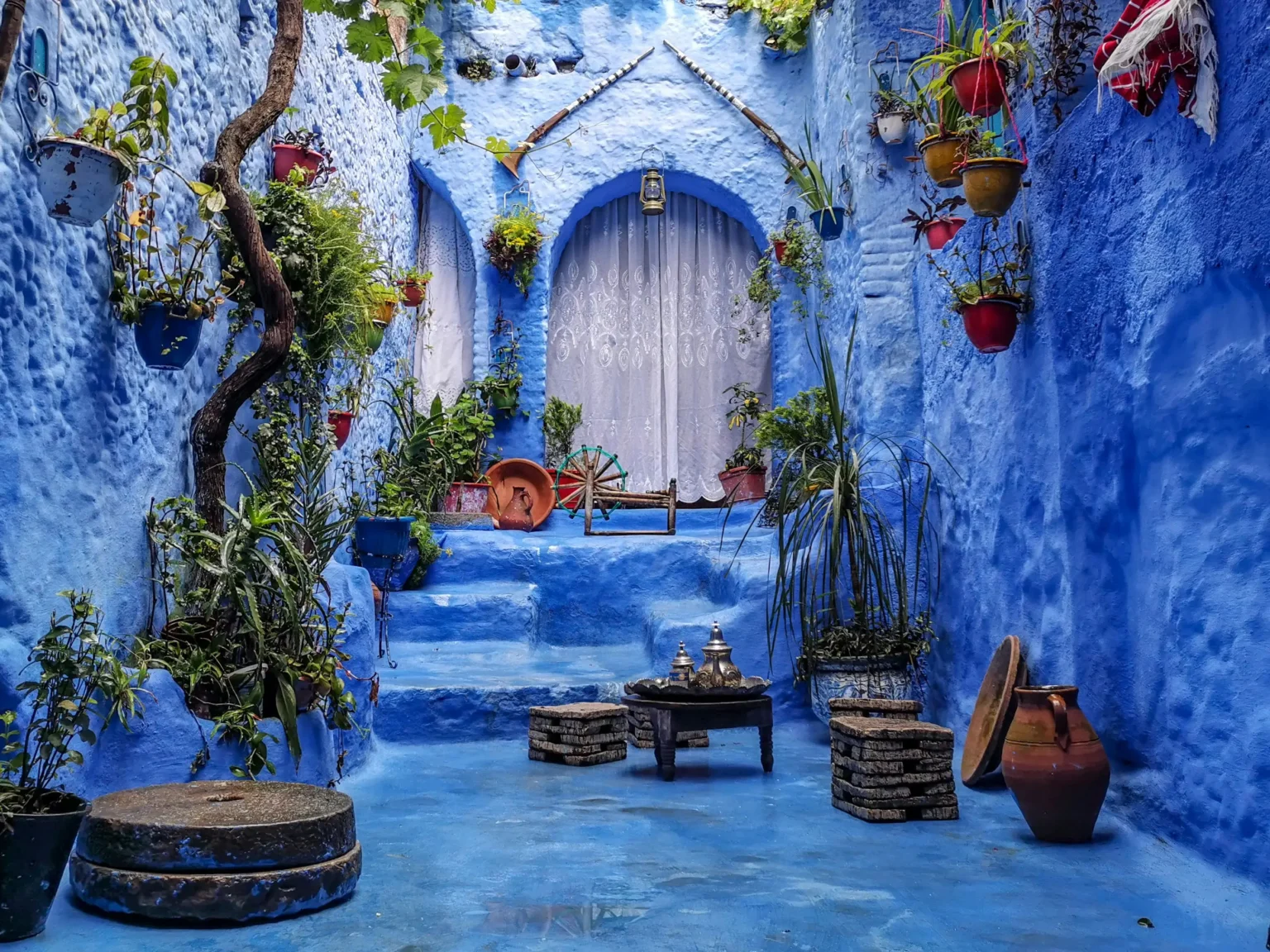
    Four hours south-west through the Rif mountains — the last mountain driving of the trip. Chefchaouen sits against a hillside where almost every wall below the mosque is washed in blue, and the town runs at half the speed of Marrakech. It is small enough to see in an afternoon, which is exactly why it comes near the end.

    Climb to the Spanish Mosque for the sunset view over the whole medina, eat dinner on Place Outa el-Hammam, and photograph the empty stairways early the next morning before the day-trippers arrive from Tangier. About 200 km today; leave Fez after breakfast.

    Blue-painted streets of Chefchaouen
  9. Day 10: Rabat and out through Casablanca

    About 250 km and three hours to Rabat, arriving for lunch. The capital is the calmest city in the country: the Hassan Tower and the Mohammed V mausoleum on the river, the Kasbah of the Udayas, the medina at human scale. It is the right place to spend a last afternoon — nothing to negotiate, nothing to climb.

    Then the train to Casablanca, under an hour, and the airport sits on the edge of town. If your flight leaves late, use the morning for the Hassan II Mosque instead — the mosque in Morocco open to non-Muslim visitors outside prayer times, with guided tours.

Distances, driver or rental, and when to book

Total driving across the ten days is around 1,600 km. A rental is the cheaper line item and fine if you are comfortable on mountain roads; a private driver costs more but removes the parking, the checkpoints and the bargaining at every kasbah gate — and on this route the driver also knows which gorge road is washed out after rain.

Both options can be arranged before you land. The desert camp is the one booking that genuinely sells out, and everything else in this itinerary can be decided the week you travel.

  • Fuel: fill up in Ouarzazate, Errachidia and Midelt — stations thin out south and east of them.
  • Desert camp: book two to three months ahead for October to April; summer runs quieter and easier.
  • Best seasons: March to May and September to November — the gorges are walkable and the dunes are not oven-hot.
  • Winter: nothing on this route closes regularly, but Middle Atlas mornings are genuinely cold — pack for it.

Begin your adventure

Your dream Morocco trip starts here

Tell us where you want to go, when, and at what pace — we’ll craft a tailor-made itinerary with private transport, hand-picked riads and local guides.